How the Military Pilot Hearing Test Works at MEPS
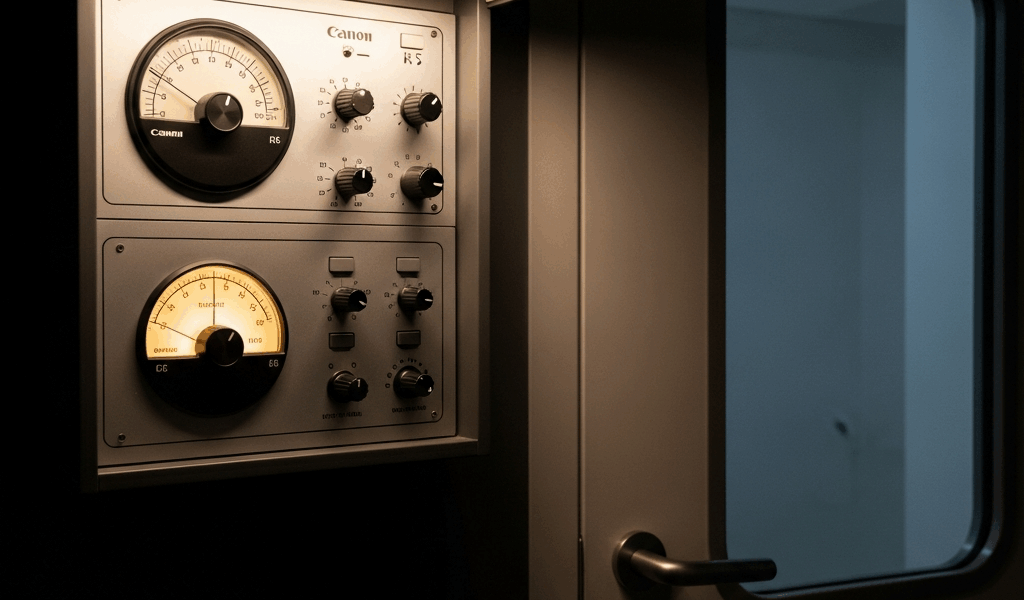
I’ve sat through enough military medical evaluations to know that the hearing booth at MEPS is nothing like the quick check at your civilian doctor’s office. Stripped down. Clinical. Completely silent except for the test tones coming through your headphones.
The audiogram protocol itself is straightforward but demands precision. You’re placed in a soundproof booth—typically one of those small, foam-lined chambers that feels slightly claustrophobic—and given a button to press whenever you hear a tone. The audiologist sits outside, watching through a window, adjusting frequencies and decibel levels on equipment that looks like it hasn’t been updated since 1987.
The military tests frequencies from 500 Hz all the way up to 8,000 Hz. That range matters because it covers the entire spectrum pilots need to operate safely. Low frequencies—500 Hz, 1,000 Hz—they handle everyday conversation and radio communications. High frequencies like 4,000 Hz, 6,000 Hz, 8,000 Hz pick up jet engine noise, radio static, and those critical warning tones in the cockpit. The military needs confidence you can hear across everything.
Here’s where most people get confused: the test measures hearing threshold in decibels (dB) at each frequency. Lower numbers mean better hearing. A threshold of 0–10 dB is basically perfect. You’re sitting at 20 dB? Still slightly above average but completely acceptable. At 30 dB and above at any single frequency between 500 and 8,000 Hz, though—that’s where you hit disqualification territory for pilot training.
The actual testing takes maybe 15 minutes. You’ll hear faint tones that gradually get louder. Press the button the moment you detect sound. The audiologist records your response at each frequency in both ears. No guessing. If you miss a tone because you weren’t paying attention, that’s on you—but the good news is they usually run the test twice to verify results.
Hearing Standards That Disqualify Pilot Candidates
Probably should have opened with this section, honestly, but the military’s hearing standards are spelled out in AFI 48-123 (Air Force Instruction) and the corresponding DoDI (Department of Defense Instruction) for all branches.
The baseline disqualification threshold is straightforward: 30 dB or worse at any frequency between 500 and 8,000 Hz. One frequency. One ear. That’s all it takes. Hit 30 decibels or greater hearing loss—you’re grounded before you ever step into a jet.
Why so strict? The military isn’t being arbitrary here. Pilot candidates need to hear radio communications clearly, and in combat or emergency situations, missing a single radio call could be fatal. An ejection seat produces roughly 180 decibels of noise—your hearing protection helps, but you still need baseline auditory function to communicate pre- and post-ejection. The cockpit itself is loud with engine noise, hydraulic systems, warning tones everywhere. A pilot with degraded high-frequency hearing might miss the audio warning for a critical system malfunction, and that’s a problem nobody wants to risk.
Here are the specific thresholds by frequency that the military uses:
- 500 Hz: 30 dB or better (disqualifying if worse)
- 1,000 Hz: 30 dB or better
- 2,000 Hz: 30 dB or better
- 3,000 Hz: 30 dB or better
- 4,000 Hz: 30 dB or better
- 6,000 Hz: 30 dB or better
- 8,000 Hz: 30 dB or better
If your pure tone average (PTA)—the mean of 500 Hz, 1,000 Hz, and 2,000 Hz—exceeds 30 dB in either ear, you fail. Additionally, the military looks at high-frequency average (HFA) at 3,000 Hz, 4,000 Hz, and 6,000 Hz. Exceeds 30 dB there? Disqualification again.
What disqualifies you also disqualifies you across branches. The Navy, Air Force, Army, and Coast Guard all follow the same DoDI baseline. That said, individual branches sometimes add their own requirements or waiver criteria, which I’ll address shortly.
Conductive vs. Sensorineural Loss and Waiver Eligibility
Not all hearing loss is created equal in the eyes of the Flight Surgeon reviewing your case.
Conductive hearing loss happens when sound waves can’t travel properly through the outer or middle ear. Think of it as a mechanical problem—cerumen impaction (earwax buildup), fluid in the middle ear from a recent infection, a perforated eardrum, Eustachian tube dysfunction. These conditions are often temporary or fixable.
I knew a candidate whose audiogram showed 35 dB loss at 1,000 Hz bilaterally. He’d just recovered from swimmer’s ear and had residual fluid in both ear canals. The ENT removed the wax, treated the infection, and three weeks later his follow-up audiogram was 15 dB across the board. That’s a waiverable situation. He submitted his medical records, the Flight Surgeon reviewed the improvement, and he got cleared to continue.
Sensorineural hearing loss is different—permanent nerve or inner ear damage. Noise-induced damage from years of shooting or engine work. Age-related hearing decline. Genetic conditions. Viral infections that scarred the cochlea. Once sensorineural loss happens, it doesn’t heal. An audiogram will show the same numbers six months later.
Waivers for sensorineural loss in pilot candidates are rare. Not impossible, but rare. The military’s concern is permanence. They’re investing years of training into you. If your hearing loss is going to get worse or stay permanently degraded, they want to know they can count on your functional hearing capability in the cockpit.
If you have conductive loss, get it treated. Get a new audiogram showing improvement. That dramatically improves waiver odds. If you have sensorineural loss—understand that waivers are an uphill battle, though I’ve seen them granted in specific circumstances, particularly if the loss is unilateral and mild (33–35 dB) and you demonstrate functional hearing adequacy in operational testing.
How to Request a Hearing Waiver for Pilot Training
You’ve failed the MEPS audiogram. What now?
First, you should get a civilian audiologist audiogram—at least if you want a legitimate shot at a waiver. Not the MEPS testing. A formal civilian audiogram on your own dime. This needs to be recent (within 30 days of submission). The audiogram should include air conduction, bone conduction, and speech discrimination scores. Your civilian audiologist will understand what you need because they work with pilot candidates.
Next, gather supporting medical documentation. If you have conductive loss, include ENT notes showing the underlying condition, any treatment you’ve received, and the prognosis for recovery. If it’s noise-induced, document your exposure history. Get a statement from your primary care provider if it’s relevant.
Complete FC Form 1942, “Request for Medical Waiver from Flight Surgeon Review.” This form lays out your case. It’s not complicated. You describe your hearing loss, explain what causes it, provide your civilian audiogram results, and note any mitigating factors or treatments you’re pursuing.
Submit to the Flight Surgeon at your local military medical facility or MEPS. Include all supporting documentation. The Flight Surgeon isn’t trying to trip you up. They genuinely want to understand your specific situation. Provide clarity.
Timeline expectations: Four to eight weeks. Sometimes longer if the Flight Surgeon requests additional testing or specialist input. The Air Force tends to be slightly faster (4–6 weeks) than Navy (6–8 weeks), though this varies by installation.
Approval rates by branch are difficult to pin down because the military doesn’t publish official statistics, but anecdotally, conductive loss waivers succeed 60–70% of the time. Sensorineural loss waivers succeed maybe 10–20% of the time, and usually only in the mildest cases with strong functional justification.
When you submit, use the phrase “functional hearing capability” in your supporting statement. Flight Surgeons use this terminology constantly. It’s not just about thresholds—it’s about whether you can function as a pilot. If you can demonstrate functional capability despite borderline numbers, you improve your odds significantly.
What Happens If Your Waiver Is Denied
Waivers get denied. They don’t deny everyone, but they do deny people.
You have appeal options. Request a formal review by the Medical Waiver Board. This is a higher-level review where a panel of Flight Surgeons and aviation medicine specialists examines your case again. Include any new information or recent testing results. If your hearing improved, that’s powerful evidence. This appeal process typically takes another 4–6 weeks.
Some branches allow secondary appeals, particularly if new medical evidence emerges. Navy and Air Force differ slightly here. Navy tends to allow one formal reconsideration. Air Force is more rigid—denial is often final unless circumstances genuinely change.
Alternative paths exist, though. If you’re disqualified from pilot training, you might qualify for non-flying aviator roles, logistics, mission planning, or ground-based flight operations. These roles have less stringent hearing standards. They’re not what you came for, but they’re still military aviation careers. Some candidates transition into unmanned aircraft systems (UAS) operations, which have more flexible medical requirements.
There’s also the hard truth: not everyone gets to be a pilot. The military’s hearing standards exist for operational safety, not to be punitive. If your hearing loss is significant and permanent, the waiver system isn’t designed to override that. You can spend months appealing a denied waiver, or you can redirect your energy toward roles where your hearing won’t be a limiting factor.
Different branches do have slightly different thresholds despite the baseline DoDI standard. Navy SNA (Student Naval Aviator) candidates sometimes face tighter standards than Air Force pilot candidates, particularly at high frequencies. If you’re considering multiple branches, clarify their specific hearing requirements before MEPS.
The bottom line: Get a civilian audiogram before MEPS if you suspect hearing issues. Submit complete medical documentation. Use the military’s own language (“functional hearing capability”). Be honest about conductive versus sensorineural loss. Waivers happen, but only when the case is legitimately made.


Stay in the loop
Get the latest milpilot updates delivered to your inbox.