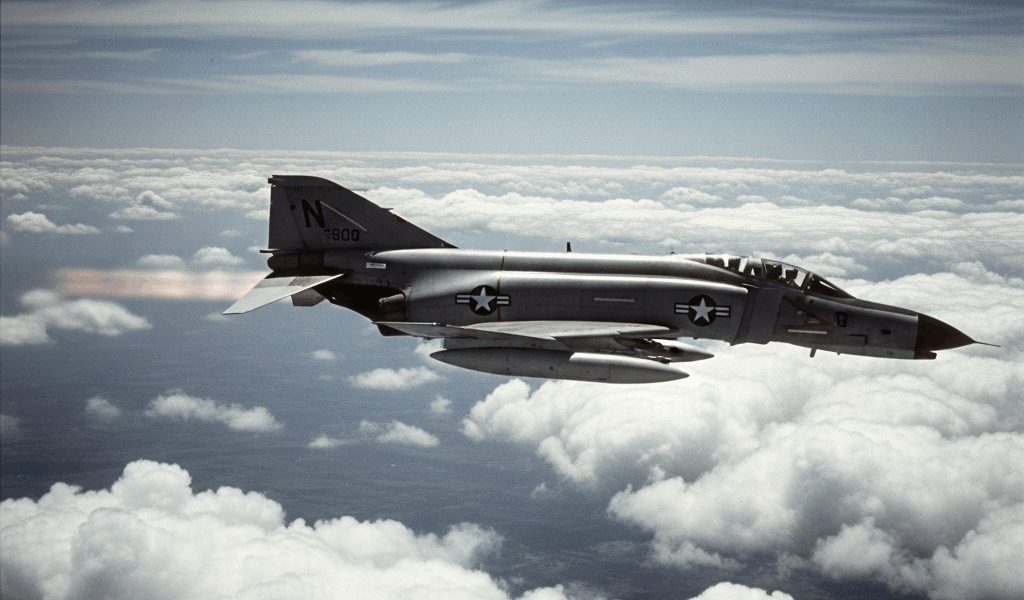
On the morning of January 2, 1967, North Vietnamese radar operators saw exactly what they expected: a stream of F-105 Thunderchief bombers lumbering toward Hanoi, fat with bombs, slow, and vulnerable. They had been picking these formations apart for weeks. So the MiG-21s scrambled, climbed through the overcast, and rolled out behind their prey — and found themselves nose to nose with the most dangerous air-superiority fighter the United States could field. The bombers were not bombers at all. They were F-4C Phantoms, and the trap had a name: Operation Bolo.
Twelve minutes later, seven MiG-21s were falling out of the sky. It was the largest single-day air combat victory of the Vietnam War, and it was the work of one of the most colorful fighter pilots America ever produced.
The man behind the trap
Robin Olds was not a young hotshot. By January 1967 he was 44 years old, a colonel, and the commander of the 8th Tactical Fighter Wing — the “Wolf Pack.” He had earned his reputation two decades earlier, flying P-38 Lightnings and P-51 Mustangs over Europe in 1944 and 1945, where he became a double ace with 12 confirmed kills against the Luftwaffe.
He was also, famously, a handful. The waxed handlebar mustache he grew in Vietnam was technically against regulations and became a symbol of fighter-pilot defiance across the Air Force. But underneath the swagger was a serious tactician and a leader who flew the hard missions himself rather than sending his men out alone. That combination — aggression, credibility, and a genuinely sharp mind for air combat — is what made Bolo possible.
The problem over North Vietnam
By late 1966, the MiG-21 had become a real threat. North Vietnamese pilots had learned to wait for the heavily loaded F-105 strike packages, slash through them, force the bombers to jettison their ordnance to survive, and disappear before the escorts could respond. The bombing campaign was being blunted not by hitting more targets but by spooking the bombers off them.
Hunting the MiGs directly was nearly impossible. They flew when they chose, from airfields that were politically off-limits to attack, and they refused to engage the F-4 escorts on anything but their own terms. Olds took the problem to Seventh Air Force commander Major General William Momyer — himself a former commander of the 8th TFW — and proposed turning the enemy’s own playbook against them.
The deception
The premise was elegant. If the MiGs would only come up to hunt bombers, then the Phantoms would become bombers — at least on radar and over the radio. Olds’ F-4Cs flew the exact routes, altitudes, and airspeeds of an F-105 strike package. They used the same call signs. They carried the same ECM pods, so they produced the same electronic signature on enemy scopes. To a controller on the ground, the formation rolling in looked, sounded, and electronically smelled like a column of slow, bomb-laden Thunderchiefs.
Every detail was chosen to sell the lie. Get any of it wrong — the wrong speed, a stray radio call, the wrong jamming pattern — and the MiGs would stay on the ground or, worse, recognize the threat and refuse to commit. The deception had to be total. And it was. The MiG-21 pilots who scrambled that morning believed they were intercepting easy prey, right up until the moment the “bombers” dropped their tanks, lit their afterburners, and turned to fight.
Twelve minutes, seven MiGs
What followed was a swirling, multi-aircraft dogfight above the clouds near Hanoi. The Phantoms had the advantage of surprise, position, and a clear mission: this time they had come to kill MiGs, not to babysit bombers. In roughly twelve minutes, the Wolf Pack shot down seven MiG-21s without losing a single aircraft. Olds himself accounted for one of the seven, maneuvering into a firing position after the initial merge.
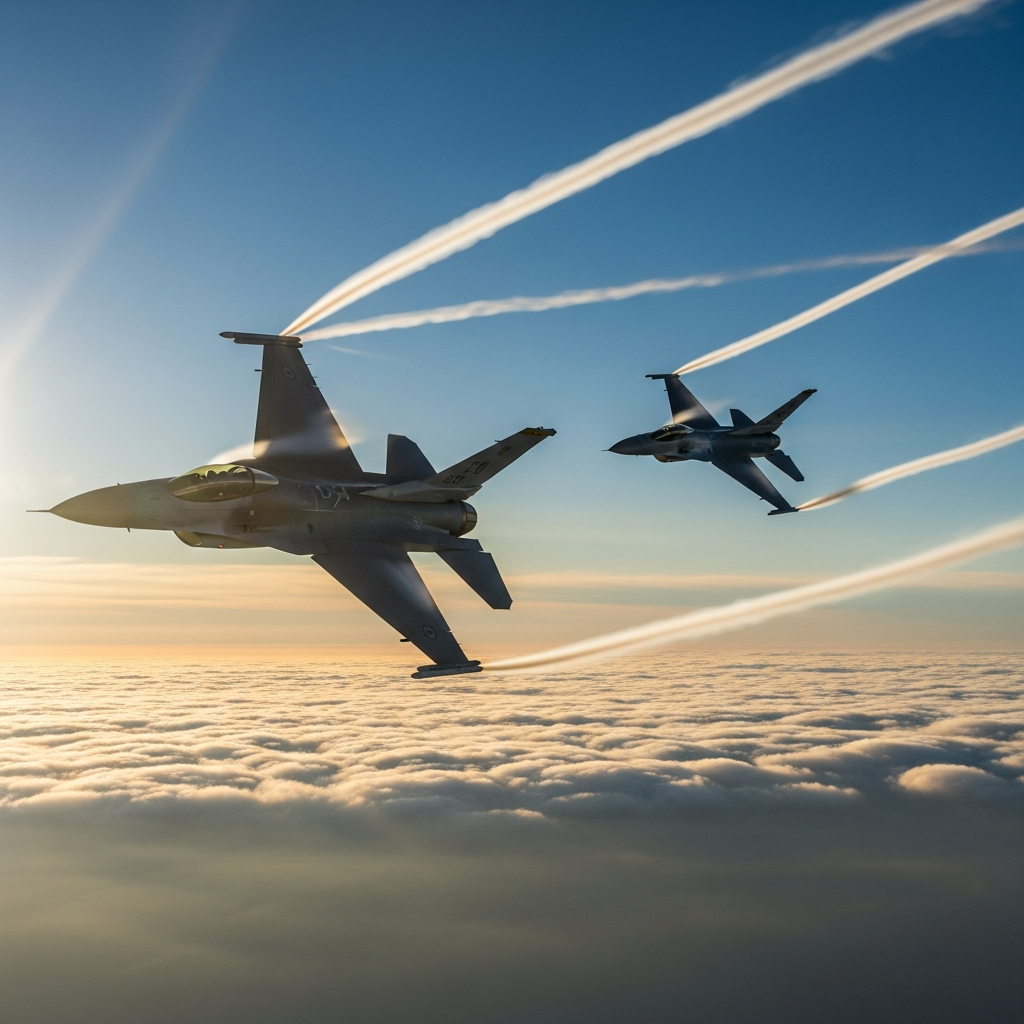
The conditions made it harder than the plan looked on paper. Low cloud over the target meant the MiGs and Phantoms kept tearing in and out of the overcast, pilots catching a flash of swept wings and a red star before losing it again in the murk. Fuel was the constant clock — the Phantoms had flown a long way in, and every minute of afterburner in the turning fight was a minute subtracted from the trip home. Olds later admitted the first MiG he went for got away from him; he missed his opening pass and had to set it up all over again. That is how real dogfights go, even for a man with a dozen kills already to his name.
Olds and the other aircrew were awarded Silver Stars for the action. But the numbers undersell the real result. The North Vietnamese had committed a sizable fraction of their MiG-21 force to that intercept, and losing seven of them in one engagement was a blow they could not absorb. Enemy fighter activity collapsed to almost nothing for roughly ten weeks afterward — which was the entire point. Bolo was never about the scoreboard. It was about clearing the sky over the strike packages, and for two and a half months it did exactly that.
The legend that outlived the mission
Operation Bolo cemented Robin Olds as a figure the fighter community still talks about. He finished his career with aerial victories in two different wars, a rare distinction, and the aggressive, lead-from-the-front style he brought to the Wolf Pack became a template for how a fighter wing should be run. When younger pilots say they want to fly like Olds, Bolo is usually what they mean.
Even the mustache became institutional. That regulation-bending handlebar grew into a symbol of fighter-pilot spirit, and to this day Air Force aircrew grow mustaches every March — informally “Mustache March” — as a nod to Olds. It is a lighthearted tradition, but it points at something real: he is remembered not only for what he did but for the irreverent, fiercely competent culture he embodied. Few single missions have produced both a tactical case study taught in war colleges and a recurring tradition kept alive decades later. Bolo did both.
What a future pilot can take from Bolo
It is easy to read Operation Bolo as a great war story and stop there. But if you are working toward a cockpit of your own, there is more in it than seven kills.
The first lesson is that air combat is won on the ground, in the planning. Bolo worked because someone studied the enemy long enough to understand exactly what they would do and why — and then built a mission around that understanding down to the radio call. The flying was superb, but the flying was the last ten percent. The other ninety was preparation.
The second is about leadership. Olds did not plan the mission and watch from the ground. He flew it, in the lead, into the same fight he had asked his men to take on. That is the kind of credibility you cannot fake, and it is why the Wolf Pack would follow him anywhere. The third lesson is the value of disciplined deception over brute force — the willingness to win by being smarter rather than simply throwing more airplanes at the problem. Those habits of mind, far more than the handlebar mustache, are what made Robin Olds worth studying.
For more stories of the people who shaped military aviation, read about Chuck Yeager breaking the sound barrier, and for a modern example of airmanship under pressure, see how one C-17 crew carried 823 people out of Kabul.


Stay in the loop
Get the latest milpilot updates delivered to your inbox.