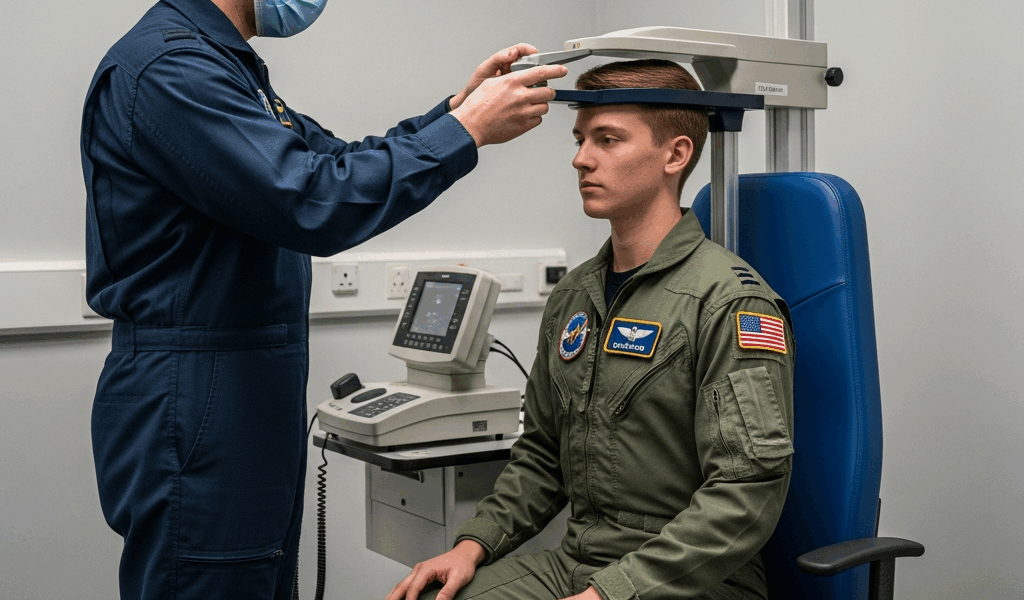
If you are tall or short and worried it will keep you out of a cockpit, here is the number that actually matters: your sitting height, not your standing height. The Air Force range people quote is 64 to 77 inches standing — roughly 5 feet 4 to 6 feet 5 — but that is the loose screen. What really decides whether you fit a fighter is how tall you are from the seat to the top of your head, and the Air Force wants that sitting height in the 34 to 40 inch band.
That distinction trips people up constantly. Two recruits can be the same height standing and have very different sitting heights — one carries it in the legs, the other in the torso. The long-torso candidate is the one who runs into cockpit limits. So before you assume you are too tall or too short to fly, measure the part that counts.
Why sitting height matters more than standing height
A cockpit is a fixed box. Once you are strapped in, three things have to work: you need to reach the rudder pedals and controls, you need clearance under the canopy, and — in an ejection-seat aircraft — you have to fit inside the ejection envelope. Sitting height drives all three. Stand-up height tells the recruiter almost nothing about whether your head clears the canopy or your torso fits the seat.
The Army spells this out with more than one measurement. Its aviation standard calls for a sitting height of 40.2 inches (102 cm) or less and a crotch height of 29.6 inches (75 cm) or greater. The crotch-height floor is really a leg-length check — you need enough leg to work the pedals and, just as importantly, to survive an ejection. That combination of an upper limit on torso height and a lower limit on leg length is the real shape of a “height requirement,” and it is why a single standing number was always a crude tool.
Height standards by branch at a glance
The exact numbers move around as policies update and vary by airframe, but here is the shape of it across the services. Treat these as the screening figures, not the final word — your actual flight physical and the specific aircraft decide your case.
| Branch | Sitting height | How they screen |
|---|---|---|
| Air Force | 34 to 40 in | Standing 64 to 77 in as a loose screen; anthropometric measurements since 2020 |
| Army | 40.2 in max | Plus a crotch (leg) height of 29.6 in or greater |
| Navy / Marines | Varies by aircraft | Similar bands, adjusted to the specific cockpit and ejection seat |
| Coast Guard | Aircraft-dependent | Mostly non-ejection airframes, so generally more forgiving |
The ejection seat is the real reason for the limits
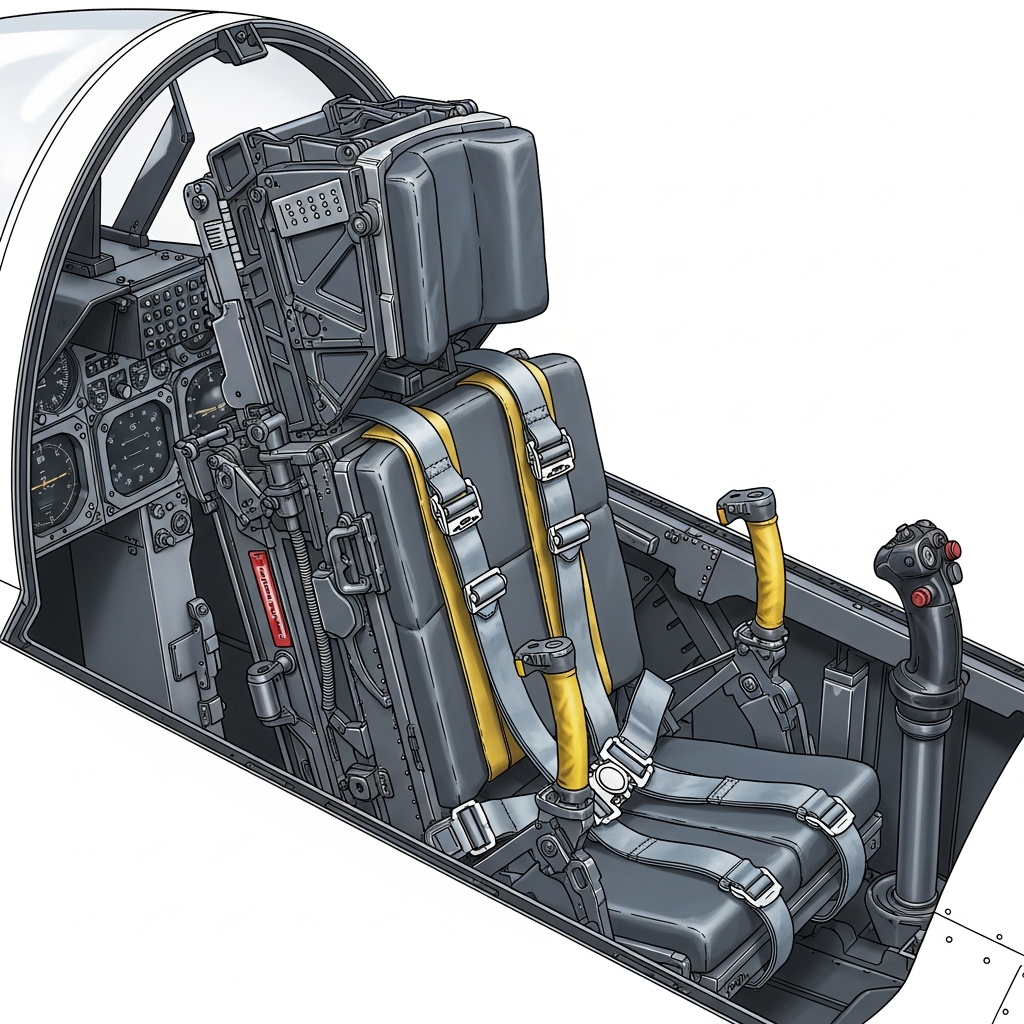
Strip away the paperwork and the height rules come down to one piece of hardware: the ejection seat. These seats are engineered for a specific range of body sizes, and stepping outside that range turns a survivable ejection into an injury, or worse.
Two failure modes drive the numbers. Too tall in the torso, and your head and spine can be outside the safe envelope when the seat fires and the canopy goes — a spinal-compression and strike risk during the violent vertical acceleration. The leg geometry matters just as much. If your thighs are not flat on the seat with your feet on the footrests before ejection, the seat accelerates into the gap and the result can be broken femurs at the exact moment you need to be conscious and intact. The seat does not adjust to you; you have to fit it. That hard physical reality, not bureaucratic caution, is what sets the band.
Some aircraft are far more forgiving
Not every flying job involves an ejection seat. Transport, tanker, and many helicopter cockpits do not, and their size limits are correspondingly looser — the constraint becomes reaching the controls and seeing out, not surviving a rocket-powered seat. A candidate who is too tall for an F-16 may be perfectly within limits for a C-17 or a KC-46.
This matters for how you plan a career. Falling outside fighter dimensions does not end your shot at flying — it steers it. Plenty of pilots who could never have fit an ejection seat have long careers moving people and cargo, refueling fighters, or flying rotary-wing. If the cockpit you want has an ejection seat, the dimensions are strict. If it does not, you have a lot more room, literally.
How the 2020 change opened the door
The biggest shift in years came in 2020, when the Air Force dropped its fixed minimum and maximum height requirements for pilots and replaced them with anthropometric screening. Instead of a single pass/fail height number, candidates are measured across several dimensions — sitting height, leg length, arm reach — and matched against the actual aircraft they might fly.
The effect was significant, especially for shorter applicants and for women, who were disproportionately screened out by the old standing-height floor. Many people who would have been rejected outright under the previous rule now qualify because the system asks the real question — do you physically fit this cockpit — rather than a proxy one. It is the clearest sign that the old “you must be between X and Y inches tall” framing was always a shortcut for the measurements that matter.
So what does anthropometric screening actually capture? More than a tape measure against a wall. The workup looks at sitting height, functional reach (can you work every control and switch without unstrapping), buttock-to-knee length for leg clearance, and overall fit against each airframe’s cockpit data. Weight matters too, both for the ejection seat’s rated limits and for the flight physical. The point of all those numbers is to map your specific body onto the specific jet — which is why two people the same height can get different answers, and why the only measurements that count are the ones taken at your physical, not the ones you estimate at home.
What to do if you are near a limit
If you are close to a boundary, the move is simple: get measured properly before you assume anything. A flight physical captures the real anthropometric data, and waivers exist for candidates who fall just outside a standard but meet other crucial criteria. Many people outside the standard range still get a waiver when the rest of the picture is strong.
The honest takeaway: do not self-disqualify over a standing-height number you read online. Sitting height and leg length decide fighter eligibility, the ejection seat is the reason, non-ejection aircraft are far more flexible, and the 2020 anthropometric system means more body types fit today than at any point in the past. Measure first, then talk to a recruiter or flight surgeon about waivers if you are on a margin.
For the other factors that can gate a flying career, see what disqualifies you from military pilot training, and if timing is also on your mind, check the military pilot age limits by branch and path.

Stay in the loop
Get the latest milpilot updates delivered to your inbox.