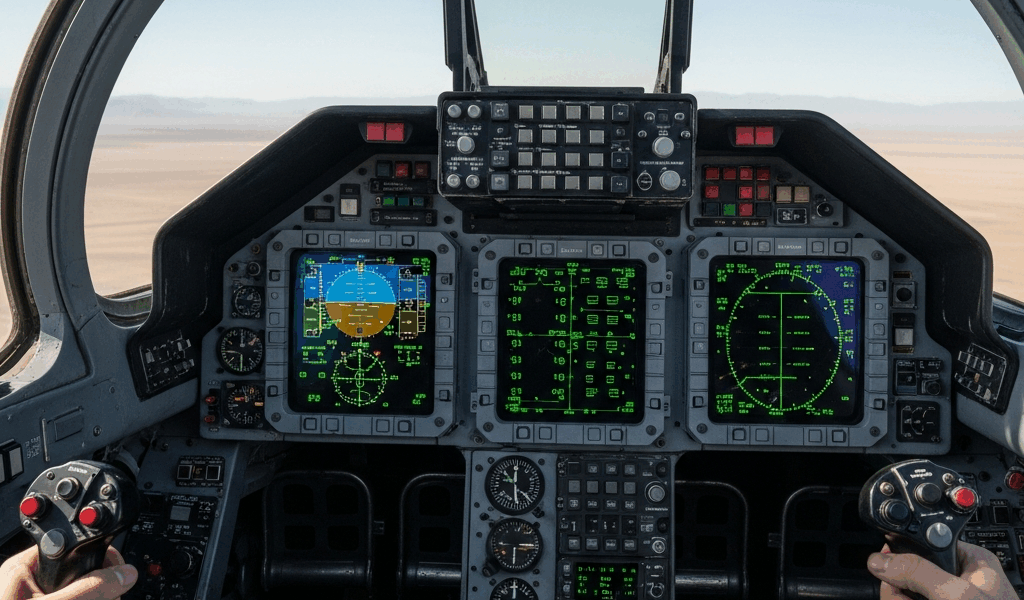
Air Force pilot training is changing, but “UPT 2.5 is dead” is too simple—and potentially misleading.
UPT 2.5 was a real Air Education and Training Command curriculum. It applied lessons from Pilot Training Next, including student-centered instruction, immersive training devices and earlier access to course material. The Air Force has since moved toward a broader modernization effort called Future Undergraduate Pilot Training, or FUPT.
That does not mean the Air Force quietly abandoned military pilot training or outsourced the entire pipeline to universities. Current students may encounter different syllabi depending on their class, base and training track while AETC scales and evaluates the newer system.
The most useful answer for an applicant is therefore not a universal month-by-month promise. It is a map of the parts that are established, the parts that are changing and the questions only a student’s orders or training unit can answer.
The current Air Force pilot-training path
The broad path remains:
- Earn a pilot allocation and commission through the Air Force Academy, AFROTC or Officer Training School—or be hired by an Air Force Reserve or Air National Guard unit.
- Complete the required medical screening, administrative processing and any pre-UPT training listed in your orders.
- Complete initial aviation training under the program assigned to your cohort.
- Learn military flying competencies in the T-6A Texan II.
- Earn Air Force pilot wings.
- Continue into an advanced fighter/bomber track or aircraft-specific follow-on training.
- Qualify in an assigned aircraft through a Formal Training Unit or equivalent course.
The details between steps three and six are evolving. AETC has used small-group trials and phased implementation rather than switching every student everywhere on one date.
What UPT 2.5 actually was
UPT 2.5 was an Air Force syllabus and instructional model—not a separate civilian flight school.
AETC described it as a learner-centered approach using the T-6A, simulators, virtual reality, 360-degree video and digital course material. Instead of treating every student as if they learned at the same pace, instructors were expected to act more like coaches while students took greater responsibility for preparation and proficiency.
The first UPT 2.5 class at Joint Base San Antonio-Randolph graduated in March 2021. Laughlin and Columbus later announced classes under the model. Official AETC reporting said the approach scaled lessons from Pilot Training Next and was one component of Pilot Training Transformation.
Those concepts did not disappear merely because the “2.5” label became less prominent. Competency-based instruction, simulation, modern courseware and more efficient use of aircraft remain visible in Future UPT.
The accurate takeaway is:
UPT 2.5 was an earlier stage of the Air Force’s continuing pilot-training transformation. Future UPT is the newer umbrella, and implementation can vary by cohort.
What Future Undergraduate Pilot Training changes
Future UPT separates basic civilian aviation skills from military-specific training more deliberately than the legacy pipeline.
In AETC’s initial model, students completed Initial Pilot Training through contracted commercial aviation programs. The first Columbus proof-of-concept class began civilian training in 2024, earning a private pilot certificate plus instrument and multi-engine ratings before moving to Columbus for a modified T-6 syllabus.
For that class, AETC reported approximately 110 civilian flight hours followed by about 60 T-6 flight hours and 50 T-6 simulator hours. A later Air Force overview described the target model as roughly 120 civilian hours completed within no more than 139 calendar days, followed by a 108-day military phase with about 55 T-6 flying hours and 50 simulator hours.
Those figures describe the announced FUPT model and early cohorts. They are not a guarantee for every student. Weather, maintenance, medical holds, scheduling, syllabus changes and follow-on training can all change an individual timeline.
The civilian segment is also not simply “college.” AETC has used Educational Service Agreements with commercial aviation providers, including programs associated with the University of North Dakota Aerospace Foundation and other flight academies. A student should rely on current orders—not an online list—to learn where and under which syllabus they will train.
Where Air Force pilot training happens
The main current U.S. pilot-training ecosystem includes:
- Columbus Air Force Base, Mississippi
- Laughlin Air Force Base, Texas
- Vance Air Force Base, Oklahoma
- Sheppard Air Force Base, Texas, home of Euro-NATO Joint Jet Pilot Training
Contracted Initial Pilot Training may occur at civilian locations before students report for the military phase. AETC has also tested international training, including a small-group program with the Italian Air Force.
These trials should not be read as proof that every Air Force pilot will attend the same civilian school, an overseas program or the same UPT base.
What students fly
Civilian training aircraft
Students assigned to the newer Initial Pilot Training model use civilian aircraft to build basic airmanship and earn civilian certificates and ratings. The exact aircraft depends on the contracted provider.
T-6A Texan II
The T-6 remains the foundation of military undergraduate pilot training. It introduces military procedures, formation, navigation, aerobatics, instruments and the pace and discipline expected in Air Force flying.
Future UPT is intended to let military instructors spend more T-6 time on military-specific competencies because students arrive with more civilian flying experience. That is different from claiming students fly T-6s at universities.
T-38C Talon
Pilots selected for fighter and bomber aircraft continue into advanced jet training in the T-38. The T-38 is aging, and the Air Force is bringing in the T-7A Red Hawk as its replacement.
The first T-7A arrived at Randolph for training preparation in December 2025. AETC reported a planned initial operational capability in 2027, followed by later deliveries to operational training bases. Until the transition reaches a student’s unit, applicants should not assume they will fly the T-7.
T-1A Jayhawk
The T-1 historically trained pilots headed toward airlift, tanker and other multi-engine communities. That model is ending.
Columbus retired its final T-1 in 2025, with a formal retirement event in March 2026. AETC’s Future UPT overview says pilots selected for mobility, special operations, command-and-control or intelligence, surveillance and reconnaissance aircraft proceed to aircraft-specific training after earning their wings rather than automatically completing a traditional T-1 track.
Some 2025 material still referenced T-1 training at particular locations and in particular programs. That is why a blanket statement that “the T-1 is already gone everywhere” can become inaccurate. The fleet transition has occurred by unit and syllabus.
When students receive wings
The point at which students receive wings has changed under different syllabi.
Under traditional Specialized Undergraduate Pilot Training, students generally completed primary and advanced phases before graduation. UPT 2.5 classes demonstrated an earlier winging point after T-6, followed by T-38 or T-1 training. Current Future UPT material similarly describes winging after the military T-6 phase, with fighter/bomber students continuing to the T-38 and other students proceeding toward their assigned weapon systems.
Students should distinguish among:
- earning Air Force pilot wings;
- completing advanced jet training, when required;
- completing aircraft-specific qualification; and
- arriving at an operational squadron as a mission-ready pilot.
Winging is a major milestone, but it is not the end of training.
How long Air Force UPT takes
There is no honest universal “UPT now takes exactly X months” answer during a transition this large.
The Air Force recruiting site continues to describe UPT as approximately one year and aircraft-specific training as another six months to one year. FUPT trial material describes a shorter route to wings: up to 139 days of initial civilian training plus 108 training days in the military T-6 phase. An Air Force-Italian trial sought to shorten one combat-aircraft pipeline from 528 days to roughly 364.
Those numbers measure different endpoints and different cohorts. They should not be added or compared without context.
For personal planning, expect the published syllabus to be only one part of the calendar. Delays can result from:
- weather and aircraft availability;
- medical or administrative holds;
- holidays and class scheduling;
- a break between phases;
- the assigned aircraft and Formal Training Unit; and
- Guard or Reserve unit requirements.
Your orders and training squadron are better sources for your schedule than an article written for a nationwide audience.
How aircraft and training tracks are assigned
Assignments are not based on preference alone, and they are not random.
Current Air Force training guidance describes a combination of:
- daily and check-ride performance;
- academic performance;
- commander or instructor assessment;
- the student’s ranked preferences;
- available aircraft assignments; and
- the needs of the Air Force.
The precise scoring and assignment process depends on the applicable course and policy. A high class ranking can improve the chance of receiving a preferred available assignment, but no candidate should treat a particular aircraft as guaranteed.
Guard and Reserve pilots differ because they are typically selected by a unit for a known aircraft and location before UPT. They still attend the training directed by their orders. That does not mean they receive priority access to a separate “legacy UPT” pipeline.
Do simulators replace flying?
No. Modern devices complement aircraft time; they do not make actual flying optional.
UPT 2.5 and Future UPT use simulators, extended-reality devices, digital courseware and data-informed instruction to let students practice procedures repeatedly and arrive better prepared for an aircraft sortie. AETC’s published FUPT model still includes substantial civilian and T-6 flight time.
Avoid claims that every simulator uses artificial intelligence, costs a particular amount or automatically changes an individual syllabus unless a current official source identifies the specific system. “AI simulator” is not a useful catch-all term for virtual reality, cockpit trainers and conventional full-motion simulators.
What applicants should do now
The program name matters less than arriving ready to learn.
Before training:
- Resolve medical and paperwork issues early through official channels.
- Follow the reporting instructions and packing list in your orders.
- Build sustainable fitness, sleep and study habits.
- Learn basic aviation concepts from approved material, but do not rely on leaked checklists or outdated “gouge.”
- If assigned civilian Initial Pilot Training, treat it as military training even when the location looks like a commercial school.
- Confirm pay, housing and travel questions with the servicing personnel or finance office; online estimates cannot account for individual status.
During training:
- Prepare before each event and ask for clarification early.
- Chair-fly procedures and use authorized simulators deliberately.
- Accept direct feedback without turning one weak event into a verdict on your career.
- Help classmates while remaining accountable for your own preparation.
- Recheck official guidance whenever your class transitions to a new syllabus.
Service commitment after pilot training
The Air Force states that pilots incur a 10-year active-duty service commitment after completing pilot training and receiving an aeronautical rating. That commitment does not generally begin on commissioning day or on the first day of UPT.
Reserve and Guard candidates should review the contracts and service obligations applicable to their component and unit.
Frequently asked questions
Is UPT 2.5 gone?
The label has been overtaken by Future Undergraduate Pilot Training, but many of its core ideas—student-centered learning, simulation, accessible courseware and competency-based progression—remain part of the modernization effort. It is more accurate to call it an earlier phase than a failed program that vanished.
Does every Air Force pilot now train at a civilian university?
No. Future UPT incorporates contracted civilian Initial Pilot Training, but providers and rollout can differ. Students still complete military-specific T-6 training, and current cohorts do not all have an identical pipeline.
Do mobility pilots still fly the T-1?
The Air Force is retiring the T-1 and moving toward sending mobility and other non-fighter/bomber pilots from the T-6 winging point to aircraft-specific training. Transition timing has varied by unit, so current orders control.
Will new students fly the T-7 instead of the T-38?
Not automatically. The T-7 is entering the training enterprise, but AETC’s published plan targets initial operational capability in 2027 and later deliveries to other bases. The T-38 remains in current advanced jet training.
Is UPT easier now?
There is no evidence that the standard for becoming an Air Force pilot has been reduced. The redesign changes where foundational skills are learned and how instructors use flight and simulator time. Students must still demonstrate the required aviation and military competencies.
Can I choose my aircraft?
You can state preferences, but assignments depend on performance, available seats and Air Force needs. Guard and Reserve candidates are commonly hired for a unit’s aircraft before attending training.
Related MilPilot guides
- AFROTC Pilot Slot: How Competitive It Is and How Selection Works
- Military Pilot Age Limits by Branch and Commissioning Path
- How Long Military Pilot Training Takes
- What Happens If You Wash Out of UPT
- How ROTC Cadets Become Fighter Pilots
Aircraft assignment comes after pilot training; see the documented path from Air Force pilot training to a B-2 assignment.


Stay in the loop
Get the latest milpilot updates delivered to your inbox.