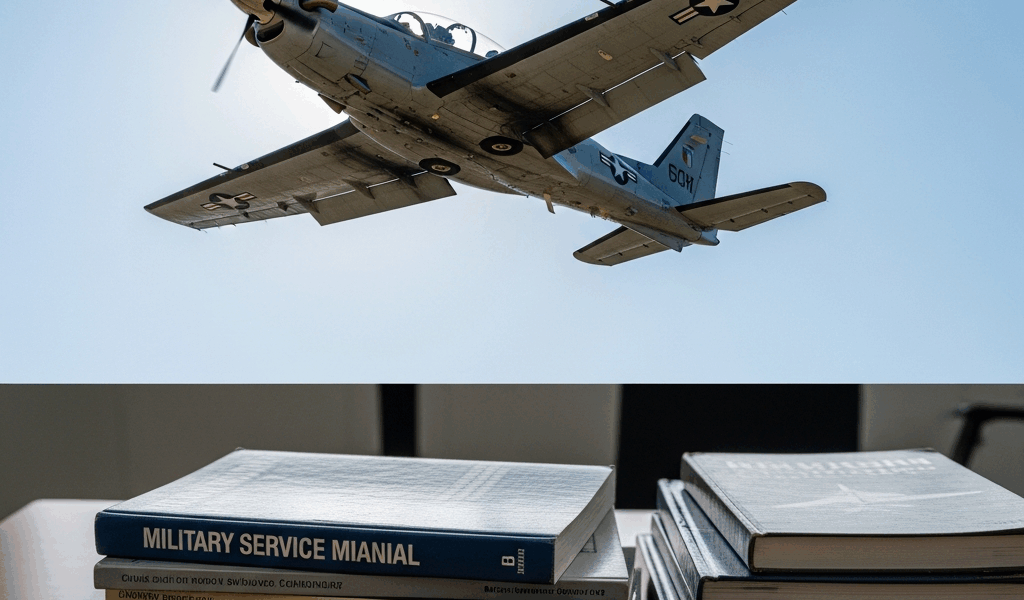
Yes—but the practical answer is much narrower than “every branch has a no-degree pilot program.”
The clearest current route is Army Warrant Officer Flight Training (WOFT). The Army accepts qualified 153A aviation warrant-officer applicants with a high school diploma or GED.
For traditional manned-pilot careers in the Air Force, Navy, Marine Corps and Coast Guard, candidates generally become commissioned officers through pathways tied to a bachelor’s degree. There are limited exceptions and adjacent programs, but they should not be confused with a broadly available no-degree route to fighters, transports or helicopters.
Quick answer: A civilian high-school graduate can apply for the Army’s 153A warrant-officer aviator pathway without first earning a bachelor’s degree. The Air Force and Navy publish a bachelor’s degree as a pilot qualification. Marine aviation is an officer program completed with a bachelor’s degree. The Coast Guard has a narrow OCS education exception for certain experienced active-duty Coast Guard members, but it is not a civilian no-degree pilot program and does not guarantee flight school.
Military pilot education requirements by service
| Service/path | Bachelor’s degree required before the pilot path? | Important qualification |
|---|---|---|
| Army 153A aviation warrant officer | No | High school diploma or GED is accepted; selection and all other requirements still apply |
| Army commissioned aviation officer | Generally yes by commissioning | Competes through an Army officer commissioning and branch process |
| Air Force pilot | Yes | Pilots are commissioned officers through USAFA, AFROTC or OTS |
| Air Force Reserve/Air National Guard pilot | Yes | Unit-sponsored status does not remove commissioning education requirements |
| Navy Naval Aviator | Yes | Current Navy pilot recruiting requires a four-year degree |
| Navy Air Vehicle Pilot warrant officer | Associate degree, bachelor’s preferred | Unmanned air-vehicle officer program; not a manned Naval Aviator or fighter shortcut |
| Marine Corps pilot | Yes by commissioning | Aviation option is tied to an officer commissioning program |
| Coast Guard pilot through general accession | Usually yes | Coast Guard aviation is an officer specialty; OCS and Academy are primary sources |
| Coast Guard OCS exception | Not always a bachelor’s for a qualifying active-duty Coast Guard E-5 | Narrow service/education criteria; commissioning does not guarantee flight school |
| Coast Guard Direct Commission Aviator | Prior military-pilot qualification | A transition route for already-trained military aviators, not an initial no-degree flight program |
Requirements can change. Use the current recruiting and program authority before making education, enlistment or financial decisions.
The principal no-bachelor’s route: Army aviation warrant officer
Army MOS 153A is the most direct U.S. military route for a person who wants to compete for pilot training without first earning a four-year degree.
Army recruiting guidance currently lists:
- a high school diploma or GED;
- a General Technical score of 110 or higher;
- a Selection Instrument for Flight Training score of at least 40;
- a qualifying Class 1 Flying Duty Medical Examination;
- age and service requirements;
- citizenship and security eligibility;
- completion of Warrant Officer Candidate School;
- completion of Initial Entry Flight Training; and
- the full application and selection process.
Meeting those minimums does not guarantee selection.
Civilian “street-to-seat” applicants
The Army maintains a Civilian WOFT process for non-prior-service applicants. A high-school senior may apply, subject to the program’s current rules.
A civilian applicant works through a local Army recruiter. The Army’s warrant-officer recruiting organization provides guidance, but its public Civilian WOFT page says the local recruiter handles the civilian application.
The package and sequence can include:
- initial eligibility screening;
- ASVAB testing and a qualifying GT score;
- SIFT testing;
- a Class 1 flight physical routed for Army aeromedical approval;
- security and conduct screening;
- required forms, résumé or statement and recommendations;
- interview and board processing;
- enlistment under the applicable option when selected;
- initial military training;
- Warrant Officer Candidate School; and
- aviation training.
Do not enlist under a different job based on a verbal promise that a WOFT seat will be added later. The exact enlistment option and selected status should be documented through the authorized process.
In-service Army applicants
Current Soldiers from any MOS may apply for 153A when they meet the current requirements. The Army’s 153A page identifies:
- age 18 through 32 at board selection, with specified exception-to-policy treatment;
- fewer than eight years of active federal service at the application point, subject to policy;
- GT 110;
- SIFT 40;
- Class 1 flight physical; and
- required digitally signed letters of recommendation.
The precise recommendation chain and packet checklist differ for in-service and civilian applicants. Use the correct current checklist.
Sister-service and prior-service applicants
Army warrant recruiting guidance identifies 153A as a common option for applicants from other services because it does not require a feeder MOS.
That does not mean an inter-service transfer is automatic. Applicants may need:
- conditional release or service coordination;
- age or service exceptions;
- Army-specific testing;
- an Army flight physical;
- prior-service records;
- an aviation interview; and
- selection and appointment processing.
Start with the Army’s inter-service warrant-officer recruiter instructions rather than assuming a local recruiter can resolve every release issue.
What score do you need on the SIFT?
The current Army minimum for 153A is 40.
The Army’s published “most preferred” profile currently shows 55 or higher, while expressly warning that meeting minimums does not guarantee selection. That is not the same as a hidden cutoff.
Avoid invented rules such as:
- “below 50 is automatically rejected”;
- “60 guarantees a board selection”;
- “a degree adds a fixed number of points”; or
- “civilian acceptance is always a specific percentage.”
Board results depend on the applicant pool, Army needs, complete record and policy in effect.
The Army states that one SIFT retest is permitted after a 45-day waiting period and that a passing score becomes the score of record under its current guidance. Verify the current testing rule before scheduling.
Use authorized preparation resources. Do not seek recalled test items or protected content.
Does college still help an Army WOFT applicant?
College is not a 153A minimum, but education can strengthen a record.
The current Army 153A page lists an associate’s or bachelor’s degree with at least 60 semester hours in its “most preferred” profile. It also lists a high school diploma or GED as the minimum.
That distinction should be read accurately:
- no bachelor’s degree is required to apply;
- a degree does not guarantee selection;
- an applicant without college is not automatically uncompetitive; and
- education is one part of a larger record.
A no-degree applicant can improve the package through:
- strong GT and SIFT performance;
- sustained employment or military performance;
- credible leadership;
- excellent conduct;
- fitness and medical readiness;
- accurate, specific recommendations;
- aviation exposure when affordable; and
- a complete, error-free packet.
Do not borrow heavily for a degree or private pilot certificate solely because an unofficial selection-rate article claims it is mandatory.
Do Army warrant officers only fly helicopters?
No. The Army career title remains “153A Rotary Wing Aviator,” and initial training is commonly associated with Army helicopter operations. However, the Army’s current 153A duty description says aviation warrant officers operate and command rotary- and fixed-wing Army aircraft.
This does not mean a new candidate can demand fixed-wing assignment.
Initial and later aircraft assignment depends on:
- training performance;
- class allocations;
- Army requirements;
- qualifications;
- career timing; and
- assignment and transition opportunities.
The current Army page identifies advanced airframes including UH-60, CH-47, AH-64 and fixed wing. The retired OH-58 Kiowa is not a normal current initial assignment.
Apply because Army aviation’s mission fits—not because someone promises a particular airframe.
What does Army WOFT commit you to?
The current Army 153A guidance says each aviator begins a 10-year active-duty service obligation after receiving the aeronautical rating.
The total time associated with the decision can be longer than “10 years” because training and time before winging occur before that post-rating obligation begins.
Before applying, understand:
- the enlistment or appointment commitment;
- WOCS requirements;
- the length and possible delays of flight training;
- the post-winging service obligation;
- consequences of failing to complete training;
- assignment availability; and
- active-duty, Reserve or Guard differences.
A no-degree entry path is not a shortcut around military service. It is a long technical and leadership career commitment.
For the career distinction, see Army Warrant Officer Pilot vs. Commissioned Officer Pilot.
Can you become an Air Force pilot without a bachelor’s degree?
Not through the standard current pilot accession routes.
The Air Force describes pilots as commissioned officers and lists completion of:
- the U.S. Air Force Academy;
- Air Force ROTC; or
- Officer Training School.
Its pilot qualification page lists a bachelor’s degree and says applicants may be within 365 days of receiving a bachelor’s in any major during the applicable application stage.
Air Force Reserve and Air National Guard units select pilot candidates for their organizations, but those candidates still must qualify for an officer commission. Unit sponsorship is not a degree waiver.
An enlisted Airman can pursue a commissioning path and complete a degree, then compete for pilot selection. Enlisting first does not guarantee a later pilot slot.
See How to Get an Air Force Pilot Slot for the commissioning-route comparison.
Can you become a Navy pilot without a bachelor’s degree?
Current Navy recruiting says a four-year degree is required to work as a Navy pilot and that candidates seeking an officer position in the community must hold a bachelor’s degree from a regionally accredited institution.
NAVCAD is not a current general route
The Naval Aviation Cadet program is historical, not a current path allowing a high-school graduate to become an F/A-18, EA-18G or P-8 pilot.
Current applicants should follow the Navy’s published Naval Aviator education and officer-accession requirements. A forum reference to NAVCAD or an old recruiting document is not a current program announcement.
What about the Navy Air Vehicle Pilot warrant program?
The Navy separately advertises an Air Vehicle Pilot warrant-officer career associated with unmanned aviation. Its current recruiting page lists:
- an associate degree as the educational requirement;
- a bachelor’s degree as preferred;
- warrant-officer appointment and training; and
- unmanned aircraft duties.
This is not a no-college pathway: an associate degree is a college degree. It also should not be described as a route to manned Naval Aviator assignments or fighter aircraft.
Candidates interested in this program should use its exact current eligibility rules and understand the distinction between Air Vehicle Pilot and Naval Aviator.
Can you become a Marine Corps pilot without a bachelor’s degree?
Marine pilots are commissioned officers.
College students can enter programs such as Platoon Leaders Class and pursue an aviation option before graduation, but they must complete the degree and commissioning requirements before appointment as an officer.
The phrase “apply before you have a degree” does not mean “become a Marine pilot without earning one.” It means an eligible student can begin the officer-selection process while enrolled.
The Marine Corps can offer an aviation contract to a qualified officer candidate under current program rules. That is a commitment to flight training if all conditions remain satisfied—not a guaranteed fighter, helicopter or tiltrotor assignment.
Can you become a Coast Guard pilot without a bachelor’s degree?
Coast Guard aviation is an officer specialty. The main initial routes are the Coast Guard Academy and Officer Candidate School, followed by selection for flight school.
The Academy awards a bachelor’s degree. Coast Guard OCS generally requires one.
Narrow OCS education exception for Coast Guard members
Current Coast Guard recruiting eligibility shows a limited alternative for an active-duty Coast Guard E-5 with at least four years of Coast Guard service, including at least two on active duty.
Instead of a bachelor’s degree, that applicant may satisfy the published OCS education requirement through either:
- specified American Council on Education-recommended scores on five general CLEP examinations; or
- 30 semester hours or 45 quarter-hours of college, including college mathematics or the specified CLEP alternative.
This is important but narrow:
- it is not available to a civilian with only a high school diploma;
- it requires Coast Guard rank and service;
- it is an OCS eligibility provision, not a pilot-selection guarantee; and
- flight school remains a separate assignment or selection.
Direct Commission Aviator
The Coast Guard’s Direct Commission Aviator program is for applicants with qualifying prior military-pilot experience. It is a way for an already-trained military aviator to enter Coast Guard aviation, not an initial no-degree pilot-training program.
What about the Space Force?
The U.S. Space Force does not operate a manned military pilot career equivalent to Air Force pilot specialties.
Space Force officers can serve in space operations and other technical fields, but a claim that it offers a “pilot slot without a degree” confuses space operations, remotely operated systems and military aviation.
What about drones and remotely piloted aircraft?
The word “pilot” can refer to very different roles.
Programs may include:
- commissioned remotely piloted aircraft pilots;
- warrant-officer unmanned air-vehicle pilots;
- enlisted sensor operators;
- enlisted unmanned aircraft system operators; and
- commercial FAA remote pilots.
These roles do not share one education requirement and do not all confer a military aeronautical rating equivalent to a manned pilot.
If the goal is specifically to fly a crewed military aircraft, verify that the advertised program leads to that exact qualification.
Should you enlist first to improve your chances?
Enlisting can be a rewarding career, but it is not a statistical shortcut to flight school.
Enlist only if you are willing to serve honorably in the enlisted job on the signed contract even if no pilot opportunity appears.
Potential advantages of serving first can include:
- demonstrated military performance;
- education benefits;
- access to in-service programs;
- leadership experience;
- familiarity with service culture; and
- professional recommendations.
Potential tradeoffs include:
- years passing against age or service limits;
- mission requirements delaying education or applications;
- no guarantee of command release or selection;
- deployments and assignments;
- an existing service obligation; and
- limited control over application timing.
For Army Civilian WOFT, prior enlistment is not required. A qualified civilian can apply directly.
Building a strong Army WOFT packet without a degree
1. Confirm which applicant category applies
Civilian, current Army, Army National Guard, Army Reserve, prior-service and sister-service applicants use different instructions.
2. Verify age and service calculations
Use the board-selection date and the exact current definition. Submit exception requests with the initial packet when required.
3. Protect the GT score
GT 110 is a stated threshold in current Army guidance. Applicants who need to improve an underlying aptitude score should use the authorized education and retesting process.
4. Prepare for the SIFT
Study the officially described areas and testing format without accessing protected content. Schedule when prepared because retesting is limited.
5. Start the flight physical early
The local examination is not the end of the process. The Army requires approval through its aeromedical authority. Records requests, consultations or corrections can add time.
6. Earn specific recommendations
Recommendations should explain observed judgment, discipline, technical aptitude, leadership and potential. Generic praise or a letter from a famous person who barely knows the applicant adds little.
7. Document education honestly
Include high school, GED, college credits, vocational training and certifications accurately. Do not hide an incomplete college record.
8. Explain why Army aviation
A credible statement connects Army mission, warrant-officer service and long-term commitment. “I want free flight training for the airlines” is not a persuasive service rationale.
9. Audit the complete packet
Use the current checklist. Confirm signatures, dates, versions, score reports, medical status and waiver routing.
10. Maintain a second plan
Selection is competitive. Decide whether to reapply, complete college, pursue civilian aviation or follow another military career if not selected.
Common myths
“NAVCAD currently lets you fly Navy fighters without college”
False. Current Navy pilot recruiting requires a bachelor’s degree. Historical NAVCAD information is not a current accession program.
“Army warrants only fly helicopters”
Incomplete. Army 153A is titled Rotary Wing Aviator, but current Army guidance describes warrant officers operating rotary- and fixed-wing aircraft. Aircraft assignment remains needs-based.
“A SIFT score of 55 guarantees selection”
False. The Army lists 55-plus as “most preferred,” not guaranteed. Minimum eligibility is not board selection.
“You have to enlist before applying to Army flight school”
False for qualified civilians. The Civilian WOFT pathway allows non-prior-service applications.
“Guard and Reserve remove the degree requirement”
False for Air Force pilot positions. Guard and Reserve pilots still must qualify as commissioned officers.
“Any drone-pilot job leads to a manned cockpit”
False. Unmanned and manned aviation programs have different classifications, training and career paths.
Frequently asked questions
What military branch lets you become a pilot with only a high school diploma?
The Army’s 153A warrant-officer aviator pathway accepts a high school diploma or GED as the minimum civilian education credential, subject to all other requirements and selection.
Is Army WOFT really “high school to flight school”?
It can be for a selected civilian applicant, but the candidate still completes military entry processing, Warrant Officer Candidate School and the Army aviation training pipeline. It is not direct entry into a cockpit.
Do you need prior flight experience for WOFT?
The Army’s current 153A page does not list an FAA certificate as a minimum. It lists a private pilot certificate or higher in the “most preferred” profile. Flight experience can help but is not universally required.
What is the minimum SIFT score?
The current minimum is 40. The Army currently lists 55 or higher as “most preferred.” Neither figure guarantees selection.
Can an Army warrant officer fly fixed-wing aircraft?
Yes, Army aviation warrant officers can operate rotary- and fixed-wing Army aircraft. A new applicant cannot guarantee a fixed-wing assignment.
Can you fly Air Force fighters without a degree?
Not through the current standard Air Force pilot routes. Fighter pilots first become commissioned Air Force officers and complete pilot training and later aircraft assignment.
Is there a Navy program like Army WOFT?
Not for current manned Naval Aviator accession. The Navy Air Vehicle Pilot warrant program is an unmanned aviation role and currently requires an associate degree.
Can Coast Guard enlisted members become pilots?
An enlisted Coast Guard member may pursue commissioning. A narrow OCS education alternative exists for certain experienced active-duty Coast Guard E-5 members, but OCS selection and flight-school selection are separate.
Is a GED accepted for Army aviation warrant officer?
Army recruiting currently lists a high school diploma or GED for 153A. The applicant must still meet the full program and enlistment requirements.
How long is the Army pilot obligation?
Current Army 153A guidance states a 10-year active-duty service obligation begins upon receiving aviator wings. Time spent before winging adds to the total timeline.
Bottom line
For a civilian without a bachelor’s degree who wants to become a U.S. military pilot, Army WOFT is the principal current route.
The responsible sequence is:
- verify Civilian WOFT eligibility with an Army recruiter;
- earn the required GT and SIFT scores;
- complete the Army flight-physical approval process;
- build the exact current packet;
- compete for selection;
- confirm the documented enlistment option; and
- understand the post-winging 10-year obligation.
Other services offer officer, college-student, prior-aviator or unmanned-aviation programs, but those are not interchangeable with a no-bachelor’s pathway to manned military flight training.



Stay in the loop
Get the latest milpilot updates delivered to your inbox.