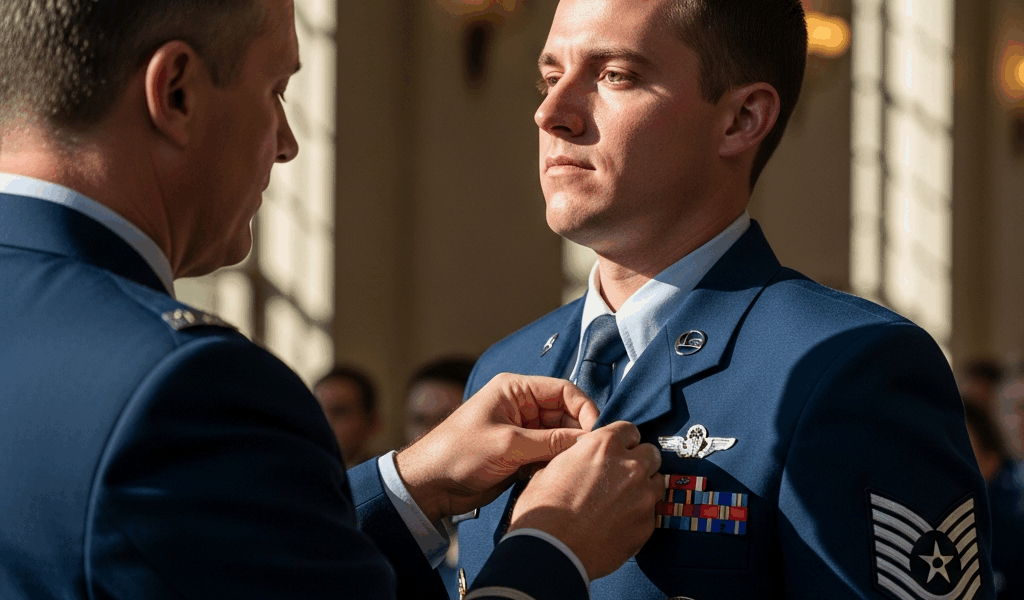
You are sitting in an AFROTC classroom wondering how many years stand between you and an operational fighter cockpit. The short answer is five to six years from the first day of college to your first sortie as a wingman in a fighter squadron. That number assumes no gaps, no delays, and a training slot that lines up with your graduation. Here is what each year actually looks like.
The Short Answer: 5 to 6 Years from College to Operational Fighter
Years 1 through 4 are ROTC. You commission as a Second Lieutenant at graduation. Year 5 is Undergraduate Pilot Training — 52 weeks at one of the USAF pilot training bases: Columbus, Laughlin, Vance, or Sheppard. Track select at the midpoint of UPT determines whether you fly the T-38 Talon on the fighter and bomber track or the T-1A Jayhawk on the tanker, transport, and special operations track. Year 5 into Year 6 is Fighter Lead-In Training at Holloman AFB followed by the B-course — the aircraft-specific formal training unit where you learn your assigned airframe. After B-course graduation, you report to an operational fighter squadron.
The variable is the gap between ROTC graduation and your UPT class date. Some officers wait 6 to 18 months in a non-flying assignment before their training slot opens. If you draw a fast class date, you can be in UPT within weeks of commissioning. If the pipeline is backed up, you might spend a year at a base doing staff work while you wait. That gap is the difference between 5 years and 6-plus.
How Fighter Pilot Slots Are Assigned at ROTC
ROTC does not hand out fighter pilot slots to anyone who asks. The Pilot Candidate Selection Method score is the single most important number in your rated board package. PCSM is a composite built from three inputs: your AFOQT pilot subtest score, your Test of Basic Aviation Skills score, and any documented civilian flight hours. The scale runs 1 to 99.
For a competitive shot at a fighter track, you want a PCSM of 80 or higher. Scores in the 60 to 79 range are competitive in good years when the Air Force is pushing throughput. Below 60 makes the fighter track difficult — not impossible, but the odds tilt against you. A handful of cadets with sub-60 PCSMs have earned fighter slots in high-demand years, but those are the exception.
PCSM alone does not decide your fate. The detachment commander ranks every cadet through a forced ranking system. Your Field Training grade, GPA, physical fitness scores, and leadership performance all feed into that ranking. The AFROTC national board then allocates rated and non-rated slots to detachments in a quota system — your detachment assigns within that quota based on the commander’s ranking.
Getting a pilot slot is step one. Getting fighters specifically happens at track select during UPT, not at ROTC. But a strong PCSM and a high detachment ranking position you for the pilot slot that makes the fighter track possible.
UPT: What 52 Weeks Actually Looks Like
Phase I — Academics (Weeks 1 through 6). Ground school. Systems knowledge, instrument procedures, weather, aerodynamics, and hours in the cockpit procedures trainer. You will know every switch in the T-6 cockpit before your first flight. The pace is fast — think drinking from a firehose, except the firehose is the T-6 systems manual and nobody slows down for you.
Phase II — T-6 Texan II. Primary flight training starts here. Your first solo is the first real milestone — typically around week 10 to 12. The syllabus covers contact flying, instrument work, formation, and navigation. Every ride gets a SAT or UNSAT grade. The T-6 phase is where most eliminations happen. It is also where track select occurs.
Track select works on performance ranking. The top performers in each class choose first. If you want fighters, you need to be at or near the top of your class when track select night arrives. The students who get the T-38 track earned it ride by ride — there is no shortcut and no lobbying your way in.
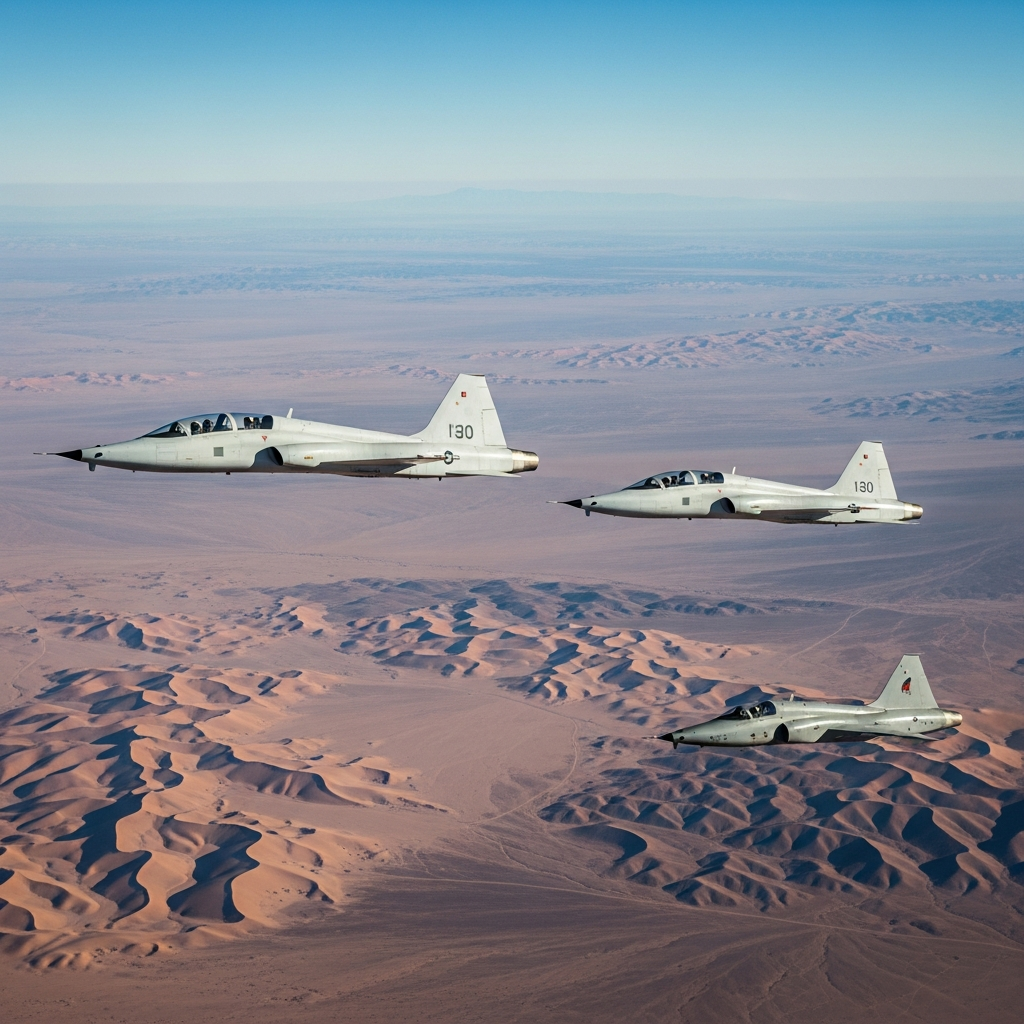
Phase III — T-38 Talon (Fighter/Bomber Track). Weeks 30 through 52 approximately. Formation flying, instrument flying, low-level navigation, and an introduction to basic fighter maneuvers. The T-38 is a supersonic trainer, and the advanced phase builds the foundation for everything that comes after. Wings ceremony at the end — you are now a rated USAF pilot.
One note on UPT 2.5: the Air Force is restructuring the curriculum with more simulator time and compressed academic phases. Some bases are converting to the new format, so specific week numbers may shift slightly. The overall timeline — roughly 52 weeks from class start to wings — has stayed consistent.
After Wings: Fighter Lead-In Training and the B-Course
Wings on your chest does not mean you are in a fighter squadron. Two more phases remain.
Fighter Lead-In Training (FLIT) at Holloman AFB, New Mexico. Two to three months flying T-38s with a tactical focus — basic fighter maneuvers, air combat maneuvering, and ground attack fundamentals. FLIT bridges the gap between the UPT training environment and the weapons-system-specific world of the B-course.
The B-course (Formal Training Unit) is where you learn your assigned aircraft. The timeline varies by airframe:
F-16: approximately 6 months at Luke AFB or Shaw AFB. F-35A: approximately 9 to 12 months at Luke AFB or Eglin AFB. F-15C: approximately 6 months at Kingsley Field. A-10: approximately 6 months at Davis-Monthan AFB.
After B-course completion, you receive your assignment to an operational fighter squadron. You report as a wingman — the most junior combat-ready position in the squadron. The goal is reached. From college Day 1 in ROTC to this moment: five to six years, depending on the gap between commissioning and your UPT class date, and whether you drew a longer B-course airframe like the F-35.
ROTC vs Service Academy vs OTS: Which Path Is Fastest?
ROTC: Four years of college plus the post-commissioning pipeline above. Total time from college enrollment to operational fighter: 5 to 6 years. This is the most common path for fighter pilots who did not attend the Air Force Academy.
Air Force Academy: Also four years of undergraduate education. The post-commissioning pipeline is identical — UPT, FLIT, B-course. There is no timing advantage over ROTC for reaching the cockpit. Academy graduates and ROTC graduates enter UPT on the same timeline.
OTS (Officer Training School): For civilians with a completed bachelor’s degree. OTS itself is 8 to 9 weeks. The bottleneck is the gap between commissioning and a pilot training slot — OTS graduates often wait 6 to 24 months in a non-flying assignment before their UPT class date. Total timeline from college graduation: typically 6 to 8 years because the wait is longer than for ROTC or Academy graduates who get pilot slot assignments during their senior year.
Direct accessions from civilian life through OTS to fighters are rare but they do happen. The math just takes longer. If you are reading this as a college freshman deciding between ROTC and planning to apply to OTS after graduation, ROTC gives you a faster path to the cockpit — not because the training is different, but because the administrative timeline is shorter.
The bottom line: ROTC and the Academy produce fighters on roughly the same schedule. OTS is typically slower. All three paths converge at UPT — what differs is how long it takes to get there.

Stay in the loop
Get the latest milpilot updates delivered to your inbox.