
Attack helicopters have gotten complicated with all the misinformation flying around about what actually makes them effective. Today, I will share it all with you.
The AH-64 Apache attack helicopter has been hunting tanks and supporting ground forces for four decades now. Despite numerous attempts to replace it—and trust me, there have been many—the Apache remains the world’s most capable attack helicopter through continuous upgrades and proven combat performance that speaks for itself.

The Sensor Suite That Changed Everything
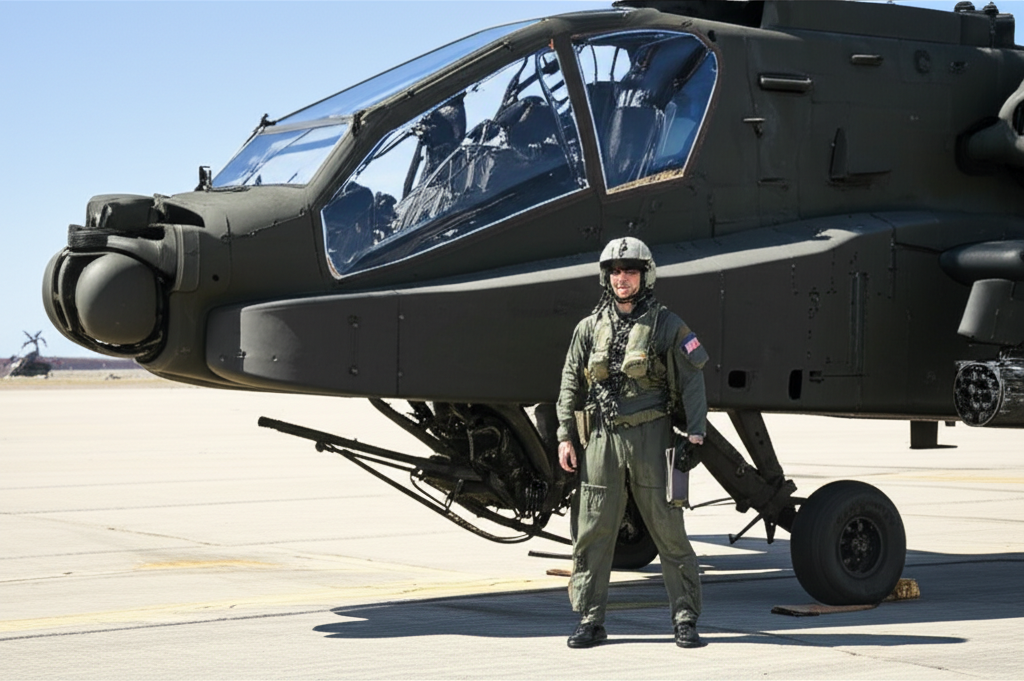
The target acquisition system defines Apache lethality more than any other feature. The nose-mounted sensor turret integrates thermal imaging, television cameras, and laser designation into one package. Pilots can identify and engage targets from ranges that keep them outside most air defense envelopes—and that standoff distance is what keeps crews alive.
The system works equally well day, night, and in adverse weather. I’ve watched Apache crews find and track targets in conditions where I couldn’t see my hand in front of my face. That’s what makes the Apache so formidable—it doesn’t care about darkness or dust storms.
The Helmet That Changed Tactics Forever
The integrated helmet and display sight system revolutionized attack aviation in ways civilians rarely appreciate. Wherever the pilot looks, weapons can point. This seems simple when you describe it, but it changed tactics fundamentally.
Previous attack helicopters required maneuvering the entire aircraft to aim weapons. Apache crews just point their heads instead. Watch old footage of earlier attack helicopters and you’ll see the difference immediately. The Apache pilots seem to be doing something entirely different—because they are.
Weapons for Every Situation
Weapons options provide flexibility for various targets that ground commanders love. The 30mm chain gun handles soft targets with devastating effect—I’ve seen what it does to vehicles, and it’s not pretty. Hellfire missiles destroy armor from standoff ranges. Rockets saturate area targets when you need suppression more than precision.
Pilots select weapons appropriate to each engagement, conserving more expensive ordnance when cheaper alternatives suffice. A Hellfire costs serious money. You don’t use one to take out a pickup truck when the chain gun will do the job fine.
Built to Take Hits and Keep Flying
Survivability features distinguish the Apache from predecessors in ways that save crews’ lives. The pilots sit in armored seats that withstand 23mm hits—that’s not something you advertise, but it matters when someone’s shooting at you. Critical systems have redundancy built in. The airframe tolerates significant battle damage while remaining flyable.
Crash-resistant fuel systems and landing gear reduce post-crash casualties. This helicopter was designed from day one with the assumption that it would take fire and that crashes would happen. That’s what makes the engineering so impressive—it accounts for worst-case scenarios.
The Training Never Stops
Flying the Apache demands intense training that never really ends. The two-crew concept divides responsibilities between pilot and copilot/gunner. Coordination must become instinctive—there’s no time to discuss who’s doing what when rounds are flying.
The aircraft’s systems offer tremendous capability but also significant complexity. Mastery takes years even after initial qualification. I’ve talked to Apache pilots with thousands of hours who still say they’re learning the aircraft. That’s not false modesty—it’s reality.
The Longbow Variant—Game Changer
The Longbow radar variant adds game-changing capability that’s hard to overstate. The mast-mounted radar allows terrain masking while still scanning for targets. The helicopter can hide behind terrain features, exposing only the radar dome, then pop up to engage with missiles that guide themselves to designated targets.
Think about what that means tactically. The enemy never sees the helicopter. They just see missiles appearing from nowhere. That’s what makes Longbow so feared.
Proven Worldwide
International operators provide testament to Apache effectiveness that you can’t argue with. Over a dozen nations fly the helicopter now. Their combat experiences from diverse theaters validate American doctrine and identify improvements incorporated into later variants. This global user community accelerates capability development in ways single-nation programs can’t match.
The Maintenance Reality
Maintenance challenges are real but manageable—I won’t pretend otherwise. The Apache is complex and demands skilled maintainers who know their business. Parts availability sometimes limits readiness rates, and anyone who’s worked in Army aviation knows the frustration of waiting on parts.
However, mature logistics pipelines and contractor support keep operational units flying. The aircraft has proven sustainable across multiple decades of service. You don’t keep something this complicated operational for forty years if it can’t be maintained.
Combat Records Speak for Themselves
Combat records from Iraq and Afghanistan demonstrate Apache dominance in ways statistics only partially capture. In thousands of engagements, the helicopter proved decisive. Convoy support missions, deliberate attacks on fortified positions, and quick reaction to troops in contact all showcased the aircraft’s versatility.
Losses occurred but remained remarkably low given operational tempo. I’ve talked to infantry guys who had Apaches overhead when things went bad. The relief in their voices when they describe hearing those rotors still gives me chills.
The Road Ahead
The Apache Guardian, the latest variant, incorporates modern communications and processing power while retaining proven systems. This incremental modernization approach extends service life without the risk and expense of new-start programs that often fail to deliver. The Army expects to fly Apaches into the 2040s at minimum.
Future threats drive continuous evolution. Proliferating man-portable air defense systems, advanced radar systems, and potential peer adversary helicopters all inform upgrade priorities. The Apache community constantly trains for the most challenging scenarios rather than resting on past successes—which is exactly the right mindset.
For Those Considering Apache Careers
For young aviators considering attack helicopter careers, the Apache offers unmatched combat relevance that’s hard to find elsewhere in military aviation. The aircraft will see action wherever American forces engage. The skills developed transfer to future platforms. The community’s culture emphasizes lethality and professionalism above all else.
Few military aviation careers offer more direct impact on ground combat outcomes. When soldiers on the ground need help, Apache crews deliver. That’s what makes this career path so rewarding—you make a difference that infantry guys remember for the rest of their lives.


Leave a Reply
You must be logged in to post a comment.