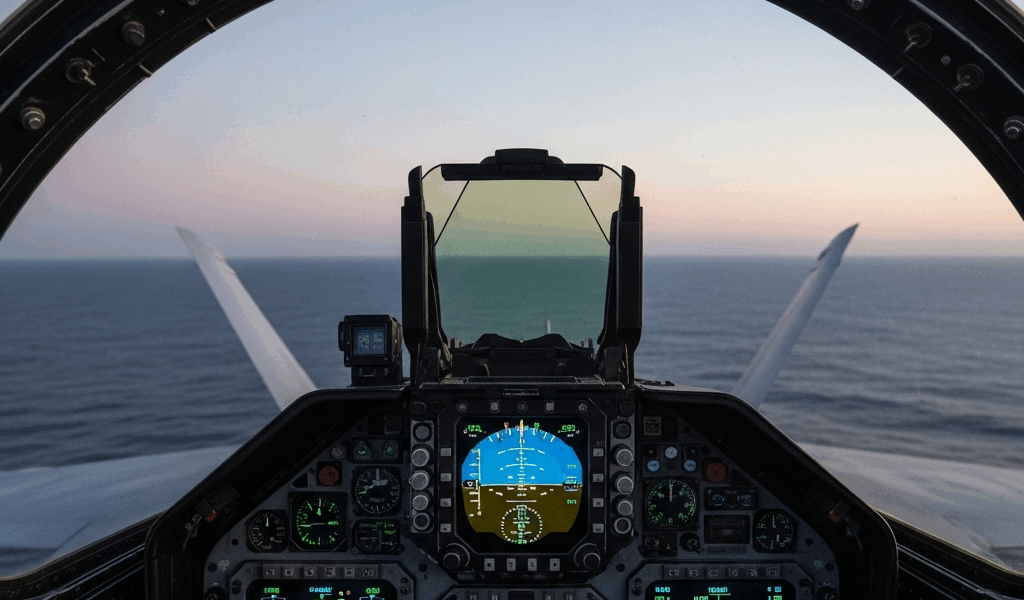
Navy Pilot vs Air Force Pilot — Training, Lifestyle, and Career Compared
The navy pilot vs air force pilot debate has gotten complicated with all the recycled, copy-paste noise flying around every military career forum and ROTC bulletin board. As someone who flew Navy for eleven years before transitioning to the airlines, I learned everything there is to know about what actually separates these two paths — not from a recruiting brochure, but from living it. Today, I will share it all with you. Most online comparisons fixate on carrier landings versus land-based flying. Sure, we’ll get there. But the differences that genuinely shaped my career — and my quality of life — were the ones nobody mentioned before I signed anything.
So, without further ado, let’s dive in.
Training Pipeline — Two Very Different Paths to Wings
The first real fork happens before you ever sit in a cockpit. Both branches want a bachelor’s degree, a qualifying ASTB or AFOQT score, and a cleared flight physical. After that? The pipelines split hard and stay split for the better part of two years.
Air Force Undergraduate Pilot Training
Air Force UPT runs at three bases — Columbus AFB in Mississippi, Laughlin AFB in Texas, or Vance AFB in Oklahoma. The Air Force recently compressed their program into a hybrid model running roughly 10.5 months. Students start in the T-6 Texan II, then split: T-38 Talon for the fighter and bomber track, T-1 Jayhawk for heavies and tankers. The T-38 track is the flashy one. The T-1 track is the one that quietly leads to C-17s, KC-135s, and eventually a very comfortable airline career.
That compression to 10.5 months was designed to chip away at the pilot shortage. Whether it actually worked is a whole separate argument. What matters here — for your decision — is that Air Force UPT is faster, more standardized, and runs on a more predictable schedule. That’s not a knock. It’s genuinely useful.
Navy Primary and Advanced Training
Navy primary training happens at NAS Whiting Field in Milton, Florida, or NAS Corpus Christi in Texas. Both use the T-6 Texan II — same airframe as the Air Force, same Pratt & Whitney PT6A-68 engine, same 1,100 shaft horsepower. After primary, students branch into tracks: jets in the T-45 Goshawk, props and multi-engine in the T-44 Pegasus, helicopters in the TH-73A, or maritime patrol. The jet pipeline is the competitive one — everyone knows it going in.
Here’s where the Navy timeline balloons out: start to wings runs 18 to 24 months, sometimes longer. That extra time isn’t padding or inefficiency. It’s carrier qualification — a requirement that adds months and represents a stress level Air Force UPT simply does not replicate. Field Carrier Landing Practice alone involves hundreds of touch-and-goes on a runway painted to simulate a carrier deck before you ever see actual water.
The 300-Foot Problem
Probably should have opened with this section, honestly, because it’s the single detail that makes Navy aviation categorically different from everything else in military flying. A carrier deck gives you roughly 300 feet of usable landing distance with the arresting wire. A standard Air Force runway at Laughlin runs about 7,000 feet. That’s not a modest gap — that’s an entirely different cognitive and physical task wearing a flight suit.
Carrier approaches fly a 3.5-degree glideslope at a precise on-speed AOA — angle of attack, not a fixed airspeed number, but a specific feel that shifts with fuel load and configuration. You cross the ramp, you fly the ball (the Fresnel lens optical landing system bolted to the ship’s deck), and you do not flare. You fly the aircraft deliberately into the deck. Flare like you would on any normal runway and you skip over the wire — now you’re going around at night in bad weather over black water. That instinct inversion, the trained refusal to do what your brain screams at you, takes real time to build. It doesn’t happen in 10.5 months. It doesn’t happen in 15 months. It happens after a lot of ugly practice approaches and a few humbling debrief sessions.
My first trap at sea — T-45, NAS Oceana, 2004 — was the most narrowly focused I have ever been in my life. Ball. Lineup. Airspeed scan. Nothing else existed for those eight seconds. That experience bonds you to the carrier community in a way that’s genuinely hard to translate to someone who hasn’t felt the wire catch.
Aircraft Selection — What You Might Actually Fly
Both branches will tell you aircraft assignment depends on needs of the service. Both branches are telling the truth. But the mechanics of how selection works — and the range of options on the table — are meaningfully different.
Air Force Aircraft Variety
The Air Force runs a wider portfolio. At the end of UPT, students go through a formal drop night — the tradition varies by base, but it generally involves class rankings driving preference selection, with assignments posted publicly in a room full of people who’ve been stressed about this for months. Available aircraft on any given drop night depend entirely on what the Air Force needs filled. A typical board might include:
- F-35A, F-22, F-16, F-15E/EX (fighter/attack)
- B-2, B-1, B-52 (bomber)
- C-17, C-130, C-5 (airlift)
- KC-135, KC-46 (tanker)
- MC-130, AC-130, CV-22 (special operations)
- E-3, RC-135, E-8 (ISR and command and control)
A class of 20 students might see eight different airframes on that board. Top class performers pick first. Graduate near the top at Laughlin and there’s an F-35A slot available — it’s yours to take. That meritocracy is real. It’s not marketing language. It actually works that way.
Navy Aircraft Selection
The Navy’s process works differently. After completing the advanced jet pipeline in the T-45, students move to Fleet Replacement Squadron detachment assignments. The carrier jet world is more concentrated:
- F/A-18E/F Super Hornet (the dominant platform by a wide margin)
- F-35C (growing, but billet count is still limited)
- EA-18G Growler (electronic attack — selected from within the Super Hornet pipeline)
- E-2D Hawkeye (fixed-wing, carrier-based, not a fighter)
Maritime patrol sends you to the P-8A Poseidon. Helicopters cover the H-60 and H-53 platforms. The Navy community is smaller and tighter — you will likely spend your flying career on one or two airframes. That’s either a feature or a limitation depending on who you are.
My honest take: if flying a variety of aircraft over a long career matters to you, the Air Force opens more doors. If mastering a specific weapons system at a very high level — and flying it operationally off a ship — is what gets you up in the morning, the Navy is the correct answer. That’s what makes this community endearing to us carrier guys. The intensity of focus is the point.
Lifestyle and Deployment — The Day-to-Day Reality
Motivated almost entirely by the lifestyle question when I was a midshipman at Annapolis, I cornered every fleet pilot I could find and asked what the day-to-day actually looked like. The answers varied more than I expected — and a few of them were uncomfortable to hear at 21.
Air Force Base Life
Air Force pilots are generally stationed at fixed, land-based installations. Dyess AFB in Abilene, Texas. Seymour Johnson AFB in Goldsboro, North Carolina. Moody AFB in Valdosta, Georgia. These are places where you buy a house, your kids attend the same school for consecutive years, and your spouse can actually build a professional life without relocating every 18 months. The Air Force deploys — expeditionary air wings rotate through the Middle East and Pacific on 90 to 180-day cycles — but those deployments don’t require your family to uproot, and the schedule is generally readable six months ahead.
I’m apparently someone who notices commissary quality on joint assignments, and Langley AFB’s commissary is genuinely well-stocked while some Navy installations never quite reach that level. The facilities trend newer. The Air Force has historically spent more per-capita on quality-of-life infrastructure, and it shows on the ground.
Navy Carrier Life
Navy carrier aviators deploy on ships. A standard deployment cycle runs 6 to 9 months. You are at sea — your family is at home. Your homeport, whether that’s NAS Oceana in Virginia Beach, NAS Lemoore in California’s Central Valley, NAS Jacksonville in Florida, or NAS Whidbey Island in Washington state, becomes your family’s entire support network while you’re gone. That network matters enormously. Don’t underestimate it when you’re picking orders.
Lemoore is the one nobody talks about honestly. It sits in California’s Central Valley, roughly 45 minutes from Fresno. Summer temperatures hit 105°F routinely — I’m talking June through September, reliably brutal. The housing market near base is limited, the nearest city of any real size requires a drive, and there is no beach. It is not what most people picture when they imagine a Navy pilot lifestyle. Oceana is better — Virginia Beach has an actual city attached to it, and the community there is genuinely tight in a way that carries real weight through long deployments. But you are still leaving your family for months at a time, repeatedly, throughout your sea tour.
I won’t soften this. My first deployment ran eight months. I missed my daughter’s first steps. That’s the real cost of carrier aviation — it doesn’t appear in any recruiting brochure, and no bonus payment covers it. Don’t make my mistake of not thinking hard about that before you sign.
Career Satisfaction Patterns
Pilots who stay in the Navy long-term almost universally cite the community and the mission. Pilots who leave early almost universally cite deployment tempo and unpredictability. Air Force pilots who stay point to career progression and lifestyle stability. Air Force pilots who leave often wanted more operational intensity. Both communities produce deeply satisfied people — and deeply burnt-out ones. The branch isn’t the only variable in that equation. Not even close.
Pay, Bonuses, and Airline Exit
Probably should have opened with this section too, honestly. This matters more than most 22-year-olds will admit when they’re idealistic about service. Eleven years later, those financial decisions compound in ways that are genuinely significant — and I have the spreadsheet to prove it.
Aviation Bonus Structures
The Air Force Aviation Bonus program currently offers up to $50,000 per year for eligible pilots signing multi-year continuation agreements. Exact amounts shift based on aircraft type, year of service, and what the Air Force needs filled at the time of the offer. Fighter and bomber pilots have historically seen higher rates — though the service has periodically equalized things to plug retention gaps in specific communities.
The Navy’s Aviator Continuation Pay runs a similar structure, with rates that have historically lagged the Air Force — recent figures ranging from $25,000 to $35,000 per year for multi-year agreements, though the Navy has been pushing numbers upward to stay competitive. The gap has narrowed in the last five years. It hasn’t closed.
Neither program makes you rich. They exist to bridge the gap between military pay and regional airline starting pay — which has also climbed dramatically. Regional first officers at Envoy or SkyWest now start around $100 per flight hour against a roughly 1,000-hour monthly guarantee, putting year-one earnings somewhere between $60,000 and $70,000. Major carriers — Delta, United, American, Southwest — pay new-hire first officers in the $130 to $160 per hour range. Model those trajectories out honestly and the math on staying versus leaving shifts fast.
Service Commitments and Transition Timing
Air Force pilots carry a 10-year active duty commitment from the date of wings. Navy pilots carry 8 years. That two-year difference is not trivial — it represents roughly $300,000 to $400,000 in forgone seniority income at a major carrier, depending on pay rates when you actually get there.
Frustrated by the vagueness of military career guidance in 2014, I built a comparison spreadsheet using Boeing 737 captain pay scale data from an Aviation Week salary survey against my projected Navy O-5 compensation numbers. Nothing sophisticated — just two columns and a timeline. The military looked genuinely competitive through about year 14. After that, the seniority curve at a major carrier separated sharply upward. That exercise shaped every career decision I made over the following four years.
Navy pilots also face more turbulence in transition timing. If you’re mid-deployment when your commitment expires, you don’t simply walk out. Extensions happen — operationally and bureaucratically. The Air Force transition process, from what colleagues have described, runs more predictably. Palace Chase exists as a cleaner off-ramp. The Navy equivalent is harder to navigate and more subject to mission requirements overriding personal timelines.
Airline Hiring Edge
Both communities produce strong airline candidates. Navy pilots bring arguably sharper instrument scanning and crosswind technique built under genuine pressure. Air Force pilots bring broader type experience across more airframes. Neither advantage is decisive in hiring — the ATP certificate, total logged hours, and a clean record drive most of the decision. But Navy pilots in my transition cohort consistently heard from checkairmen that their instrument scan and landing technique stood out among military applicants. Small edge. Real edge.
The Verdict — Which Branch Should You Choose?
I’m not going to hand you a both-sides-have-merits non-answer. You came here for a direct take.
Choose the Air Force if: aircraft variety matters across a long career, base stability for your family is a real priority, or you’re building toward the most financially favorable long-term trajectory. The UPT pipeline is faster, the bonus structure is stronger, the service commitment runs longer but delivers more predictability, and the bases tend to sit in places where families can actually put down roots. If flying C-17s into austere strips in Africa, or B-52s on nuclear deterrence sorties, or CV-22s supporting special operations is what pulls at you — the Air Force is the only path to those specific missions. Full stop.
Choose the Navy if: you want to land on carriers and you genuinely understand — not romantically, but practically — what that means for your family and your schedule over a decade. The carrier landing isn’t just a party story. It’s a different relationship with aviation entirely. The Navy fighter community is smaller, tighter, and operates at a different intensity level. The deployments are longer and less predictable. The pay runs slightly lower. For the people who are built for it, that trade is worth every bit of it.
One thing I’d push back on from how this debate usually gets framed: don’t pick based on aircraft glamour alone. Plenty of Air Force pilots flying KC-135 tankers are more satisfied with their careers than Navy fighter pilots grinding through a third deployment while their kids ask their spouse why dad isn’t home again. The aircraft is honestly the smallest factor in whether you’ll be happy ten years in. Community, deployment tempo, and lifestyle fit — those are the variables that actually drive satisfaction over a career. Think hard about those before you sign anything.
Both paths produce military pilots. Only one of them lands on a ship at night in bad weather. If that sentence makes your pulse go up instead of down, you already know your answer.


Stay in the loop
Get the latest milpilot updates delivered to your inbox.