Today, I will share it all with you.
Food tells stories about military aviation culture. Three particular meals capture different aspects of the pilot experience better than any formal history or documentary could. From pre-dawn briefings to O-Club celebrations, what pilots eat reveals how they live and fly in ways that outsiders rarely understand.
The Pre-Dawn Briefing Fuel
The pre-dawn brief room coffee and stale donuts signal mission days in a way nothing else does. Pilots gather while darkness still covers the flight line—and I mean actual darkness, not the early twilight civilians call “early.” The coffee is terrible. Nobody complains. Ever.
It’s fuel for the briefing ahead, consumed standing up while reviewing weather and threats. I’ve had countless cups of that awful coffee, and I genuinely can’t tell you what brand it is. Doesn’t matter. This meal isn’t about nutrition—it’s about ritual and readiness. You drink the coffee because that’s what you do before a mission. That’s what makes it so meaningful, even when it tastes like motor oil.
In-Flight Sustenance—Mission Dependent
In-flight meals vary by airframe and reveal mission differences that civilians never think about. Fighter pilots might go eight hours on energy bars and water bottles strapped to their legs. Reaching food requires removing gloves in unpressurized cockpits where the temperature might be well below freezing. I’ve watched fighter pilots demolish a meal in two minutes flat after landing because they couldn’t eat properly in the jet.
Transport crews enjoy actual hot meals from galley ovens, complete with real plates. Sounds luxurious until you realize they’re airborne for 14 hours straight. Helicopter pilots grab whatever fits in flight suit pockets between refueling stops—usually something squished and warm that started the day as a sandwich.
Each option reflects the mission’s demands. The fighter pilot’s energy bar represents single-minded focus on the fight. The tanker crew’s galley meal acknowledges that crew comfort matters on marathon missions. That’s what makes aviation culture so varied—the airframe shapes everything, including lunch.
The O-Club Gathering—Where Stories Are Born
The post-mission O-Club gathering represents something different entirely. Drinks flow. Food appears. Stories grow taller with each telling until nobody quite remembers what actually happened, and it doesn’t really matter anyway.
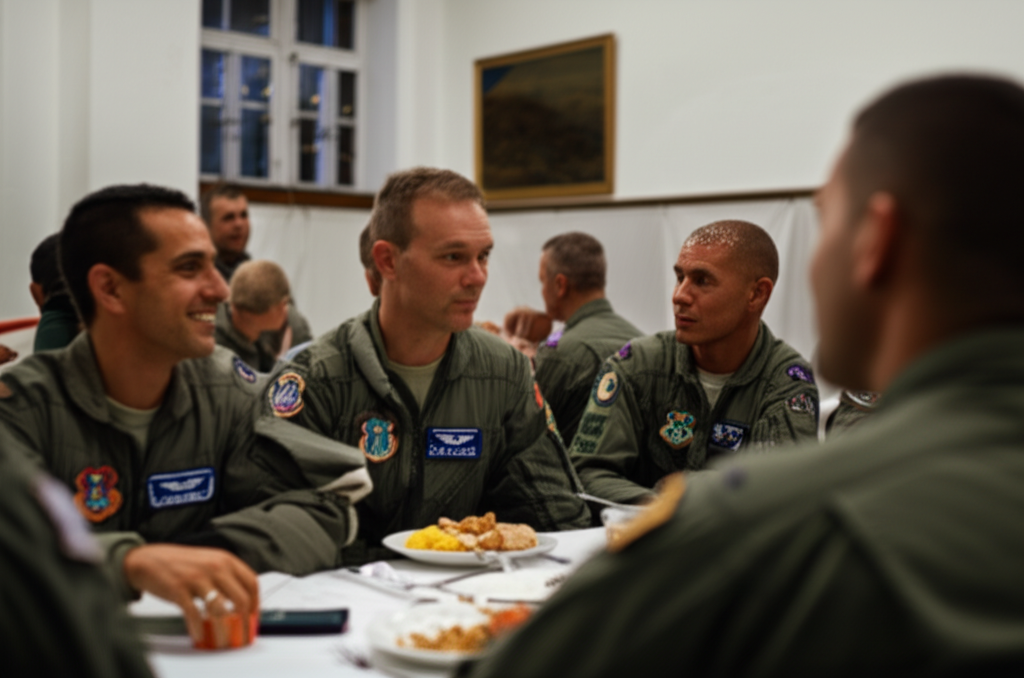
The shared meal marks survival and success. Traditions dictate who buys rounds and what toasts occur—violate those traditions and you’ll hear about it for months. New pilots learn squadron history through these rituals, absorbing culture one story at a time. I learned more about what actually happened in my squadron’s past over O-Club burgers than I ever did from official histories.
Deployed Dining—A Different World
Deployed dining changes everything in ways you can’t appreciate until you’ve lived it. Some locations offer contractor-run facilities with remarkable variety—I’ve had better steak at deployed locations than at some restaurants stateside. Others provide MREs eaten beside aircraft during quick turnarounds, washed down with warm water that tastes vaguely like plastic.
The best deployed meals often come from local sources discovered by previous rotations and passed down like sacred knowledge. “Go to the third shack on the left and ask for Ahmed” kind of intel that never makes it into any official document but gets communicated crew-to-crew like classified information.
Holiday Meals That Stay With You
Holiday meals carry particular weight that’s hard to explain to people who haven’t experienced them. Thanksgiving and Christmas dinners served by commanders honor troops far from home in a tradition that goes back generations. The food rarely matches home cooking—let’s be honest, mess hall turkey is mess hall turkey—but the gesture matters deeply.
Shared holiday meals in distant places bond people permanently. I still remember faces across tables from deployments years ago. Those people became family in ways that my actual relatives don’t always understand.
Squadron dining traditions vary widely across the force. Some emphasize formal dining-ins with strict protocols where you’d better know the rules. Others prefer casual gatherings that build camaraderie through informality. Both approaches work. What matters is that you’re eating together.


Leave a Reply
You must be logged in to post a comment.