
Today, I will share it all with you.
Three decades after its introduction, the B-2 Spirit stealth bomber still represents the pinnacle of aviation engineering. I’ve had arguments about this at countless aviation gatherings, and I’ll stand by it. No other aircraft combines its range, payload, and invisibility in a package that adversaries literally cannot see coming until it’s far too late.
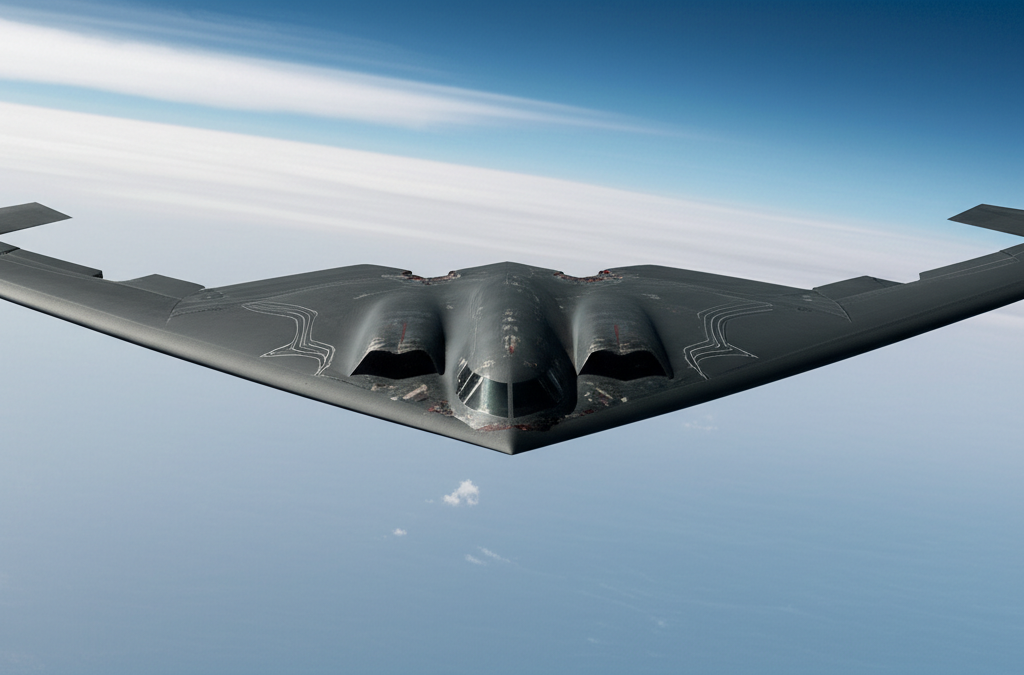
The Design That Defied Convention
The flying wing design eliminates conventional tails and fuselages that create radar returns—features that engineers had assumed were necessary since the Wright Brothers. Every surface angles away from threat radars. Composite materials absorb rather than reflect electromagnetic energy.
The result is an aircraft with the radar signature of a large bird despite weighing 170,000 pounds. Let that sink in. A bomber bigger than most houses shows up on radar like a seagull. That’s what makes the engineering so remarkable—they bent physics to serve tactical requirements.
Flying Something Completely Different
Flying the B-2 demands unique skills that don’t transfer from anything else in the inventory. Without a tail, the aircraft uses differential thrust and split control surfaces for directional control. Pilots who’ve flown it describe the handling as responsive but different from anything else they’ve flown—and these are experienced aviators who’ve flown multiple platforms.
The fly-by-wire system makes pilot workload manageable, but here’s the thing: manual reversion would be nearly impossible. The computers aren’t helping you fly this airplane; they’re making flight physically possible. That’s a level of technological dependence that took some getting used to when the aircraft first entered service.
Missions That Span the Globe
Mission profiles span the globe nonstop in ways that still amaze me. B-2s have flown combat missions from Missouri to Afghanistan and back, refueling in flight multiple times during 30-plus hour sorties. Think about that—launching from the middle of America, striking targets on the other side of the planet, and landing back home for dinner.
The two-person crew alternates rest periods in the cramped cockpit. Fatigue management becomes a critical skill when you’re flying longer than most people are awake. I’ve talked to B-2 crews about those missions, and the stories are simultaneously fascinating and exhausting to hear.
Payload That Matters
The weapons bay accommodates massive payloads that would make other bombers jealous. Eighty 500-pound bombs or sixteen 2,000-pound weapons fit inside without compromising stealth. Nuclear capability adds strategic deterrence value that’s hard to quantify but essential to national security. The B-2 can threaten any target on Earth that matters, and adversaries know it.

The Maintenance Reality
Maintenance requirements remain the aircraft’s Achilles heel, and there’s no sugarcoating this. The stealth coatings require careful attention that borders on obsessive. Climate-controlled hangars protect the sensitive surfaces—you can’t just park this thing outside like a C-130. Each flight hour demands dozens of maintenance hours from highly specialized technicians.
Only 20 aircraft exist, limiting operational flexibility in ways that frustrate planners. That’s what makes the B-2 both invaluable and limiting—you can’t be everywhere when you only have 20 jets.
The Price of Capability
Cost per aircraft exceeded $2 billion, making each B-2 more expensive than any other military aircraft in history. When people bring this up as criticism, I ask them what they’d pay for the ability to strike anywhere on Earth without being detected. This investment reflects both development expenses spread across a small fleet and the extraordinary capabilities the aircraft provides.
The Most Competitive Assignment
Pilot selection for B-2 assignments is highly competitive for good reason. The small fleet supports only a few hundred qualified crewmembers total. Candidates come from bomber or reconnaissance backgrounds with proven performance records. The community maintains tight standards and high esprit de corps that’s obvious when you meet them.
Living the Whiteman Life
Living with B-2s at Whiteman Air Force Base, Missouri, creates unique community dynamics that outsiders don’t understand. The aircraft cannot deploy to most forward locations due to maintenance requirements. Crews deploy while jets remain home. Families experience deployment separations without the aircraft actually leaving the state.
It’s a strange arrangement, but it works. The B-2 community has figured out how to sustain operations and families despite this unusual setup.
America’s Exclusive Capability
International partners have never operated the B-2, unlike fighter aircraft shared with allies. America kept this capability exclusively national for reasons that should be obvious. The technology remains classified at levels that preclude foreign involvement, reflecting both the aircraft’s strategic value and the difficulty of maintaining security across borders.
Proven in Combat
The B-2 proved its worth in combat during Kosovo, Afghanistan, Iraq, and Libya. In each conflict, the bomber struck heavily defended targets that other aircraft couldn’t approach safely. These demonstrations validated three decades of investment and proved that stealth works against real-world adversaries with real air defenses.
A Place in Aviation History
The Air Force plans to operate B-2s until the 2030s when the B-21 Raider enters service in sufficient numbers. Even then, the Spirit’s achievements will define what stealth aviation means for generations to come. The technology pioneered in this aircraft shaped all subsequent low-observable designs.
Future aviation historians will likely identify the B-2 Spirit as a defining achievement comparable to the Wright Flyer or SR-71 Blackbird. It represents what becomes possible when engineering ambition meets resources and genuine operational need. Nothing like it existed before. Nothing quite matches it still. That’s what makes the B-2 special—it expanded our understanding of what aircraft could be.

Leave a Reply
You must be logged in to post a comment.