Today, I will share it all with you.
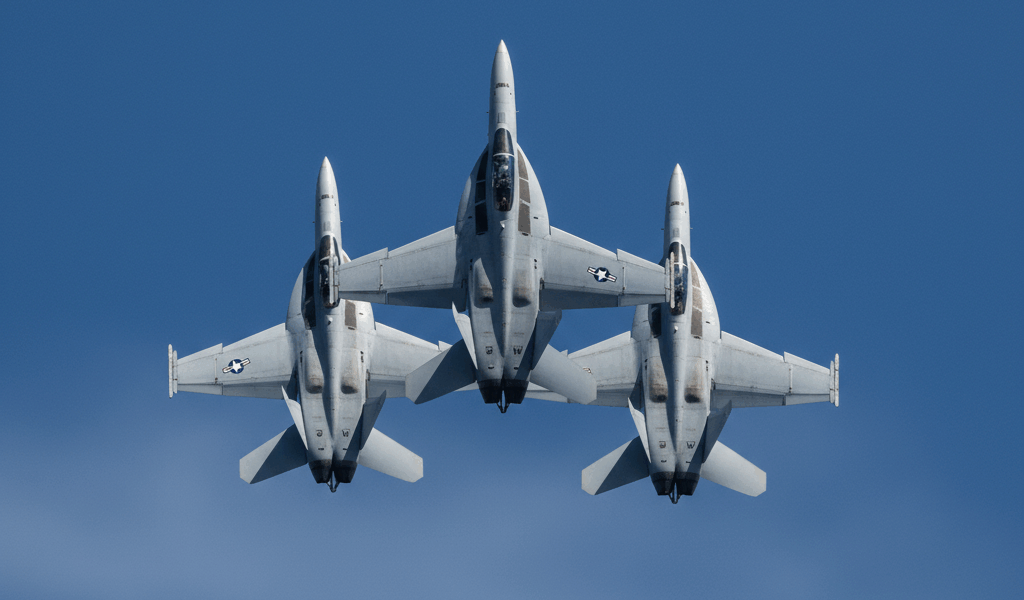
Formation flying represents one of the most demanding and rewarding skills in military aviation. Flying mere feet from another aircraft at hundreds of miles per hour requires precision, trust, and thousands of hours of practice to master. The first time I flew close formation, my hands were shaking afterward from the concentration required.
Why Formation Actually Matters
Military aircraft fly in formation for mutual support and tactical advantage, not just because it looks cool at air shows. Fighters fly together so wingmen can check each other’s blind spots and provide covering fire. You can’t watch your own six o’clock—you need someone else doing it.
Transports may fly close formation during airdrops to deliver concentrated forces quickly. Even aircraft transiting between bases often fly formation for training and efficiency. Every flight is a training opportunity.
Beyond tactical necessity, formation demonstrates precision and discipline that separates military pilots from civilian aviators. Air shows captivate audiences with tight formations that showcase skills developed through rigorous training. The Thunderbirds and Blue Angels represent the pinnacle of formation precision—and what they do in public is actually easier than what operational pilots do in combat.
Formation Positions—More Complex Than You’d Think
Basic formations start with two-ship elements. The lead aircraft sets course and speed while the wingman maintains position relative to lead. Sounds simple, right? It’s not. Four-ship formations add complexity with additional aircraft maintaining position on each other and the overall flight path. Now everyone’s watching everyone else.
Position names vary by mission type. Fingertip formation places aircraft wingtip to wingtip for parade or show flying—this is the photogenic stuff you see in posters. Route formation spreads aircraft out for navigation and fuel efficiency on long transits. Combat spread positions fighters for mutual support during tactical operations where you need room to maneuver.
The Art of Station Keeping
Maintaining formation position requires constant small corrections that never stop. Wingmen focus on specific reference points on the lead aircraft, making power and flight control adjustments to stay in position. In close formation, even minor throttle movements or control inputs can cause overshoots or undershoots that require immediate correction.
That’s what makes formation flying so exhausting—you’re never done. It’s not like cruise flight where you trim the aircraft and relax. Formation demands continuous input, continuous attention, continuous precision.
Experienced formation pilots describe the skill as becoming second nature. After enough practice, maintaining position becomes almost subconscious, freeing mental capacity for other mission tasks. I remember when that transition happened for me—suddenly I could think about tactics while flying form instead of just surviving the formation. New pilots initially find formation exhausting as they consciously process every correction. That’s normal. It gets better.
Formation Training Progression
Pilot training introduces basic formation in the primary phase, with students learning close trail and extended trail positions before progressing to fingertip and route. Fighter pilots continue formation training throughout their careers, ultimately flying the complex tactical formations used in combat where position determines who lives and who dies.
The training never really ends. Even experienced pilots fly formation regularly to maintain currency. Skills this perishable require constant practice. That’s what makes formation proficiency such a point of pride—it represents thousands of hours of dedicated practice to achieve something that looks effortless but absolutely isn’t.

Leave a Reply
You must be logged in to post a comment.