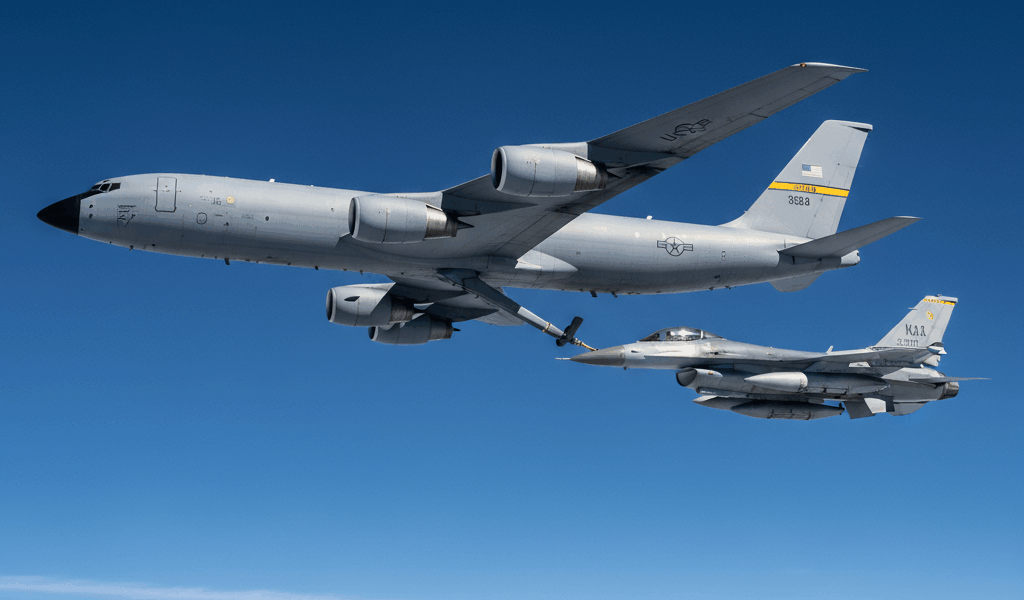
Military aviation has a hierarchy everyone understands but nobody says out loud. Fighters get the glory. Bombers get the mystique. And tanker pilots? They make the whole thing work while barely getting mentioned.
I’ve spent time around tanker crews, and there’s this running joke among them: “You’re welcome” said sarcastically to every fighter pilot who just received 20,000 pounds of gas at 25,000 feet. The fighters couldn’t reach their targets without that fuel. Everyone knows it. Somehow the tanker crews still end up invisible.
The Workhorses: KC-135 and KC-46
The KC-135 Stratotanker has been hauling fuel since the Eisenhower administration. Based on the Boeing 707—which tells you something about its vintage—it carries 200,000 pounds of transferable fuel. That’s enough to keep a squadron of F-16s flying for hours longer than their internal tanks allow.
The newer KC-46 Pegasus is finally arriving, built on the 767 platform with modern avionics and better fuel capacity. Both will fly together for years during the transition.
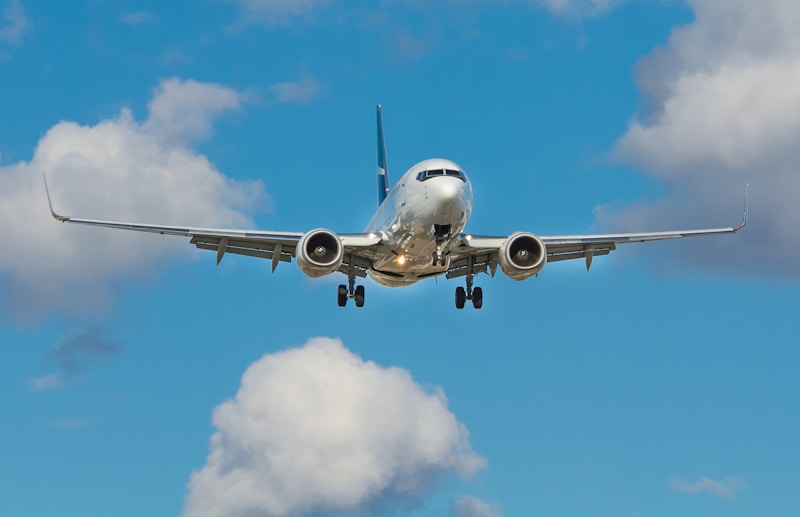
Two Ways to Pass Gas at 400 Knots
Air Force tankers use the flying boom—a rigid pipe that a boom operator flies into the receiving aircraft’s receptacle. Fast transfer rates, which matters when you’ve got fighters burning fuel faster than your car burns through a tank during highway driving.
Navy and Marine aircraft use probe and drogue: a flexible hose with a basket on the end that receivers plug into. Different technique, same result. Some tankers can do both methods, which makes life easier when you’re refueling a mixed formation of Air Force and Navy jets.
The Career Path Nobody Glamorizes
New tanker pilots start as copilots, work up to aircraft commander, eventually become instructors. The mission involves substantial travel—you’re wherever the customers need fuel, which means everywhere. Supporting deployed fighters one week, transiting bombers across the Pacific the next.
Family life stays manageable. The transition to airline flying is straightforward. And every single time a fighter jock brags about their mission, tanker pilots know the truth: couldn’t have done it without us.
What Aerial Refueling Actually Takes
The skill required to plug into a flying boom at 25,000 feet is underestimated by most people who have not tried it. Receivers fly in close formation with a large aircraft while making continuous small corrections to stay in the contact envelope. All of this happens while managing aircraft systems, monitoring fuel transfer, and communicating with the boom operator.
Formation flying demands concentration under the best conditions. Add turbulence, night operations, or nearby weather and the picture gets considerably more demanding. Both tanker and receiver crews train extensively for exactly these conditions because combat does not schedule itself around good visibility.
What Tankers Actually Make Possible
The strategic math is simple. Tactical fighters carry fuel for an hour or two of sustained flight. Long-range missions without refueling support are not possible. B-2 strikes launched from Missouri, hit targets across the globe, and returned home only because tanker crews met them over the ocean multiple times during those missions.
Every overseas fighter deployment, every extended combat air patrol, every search-and-rescue mission pushing beyond normal range exists because tanker crews made it happen. The fighters get the headlines. The tanker crews who enabled those missions go home without ceremony. Most of them seem fine with that.


Leave a Reply
You must be logged in to post a comment.