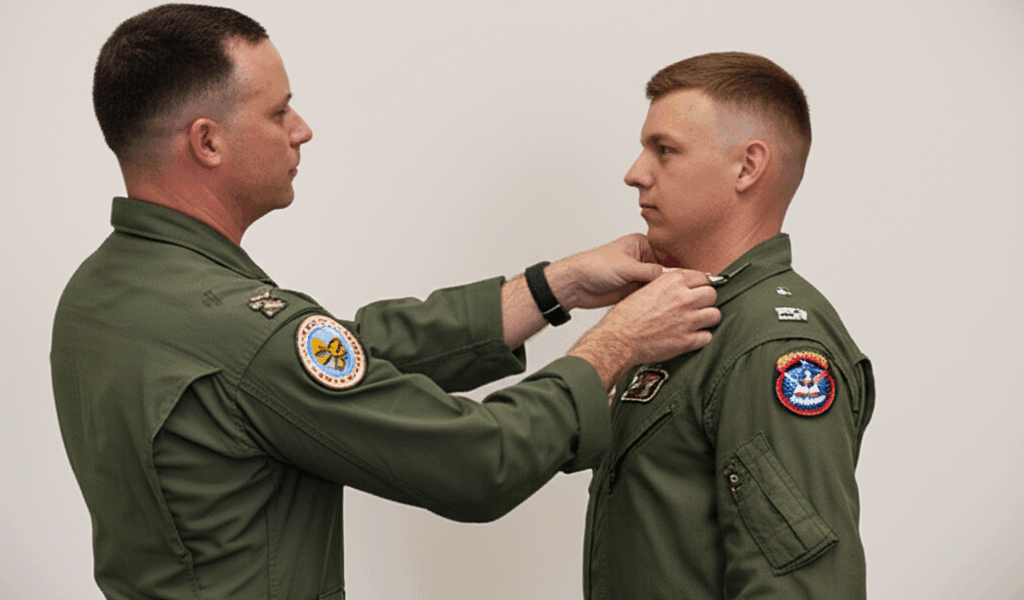
Every year, thousands of candidates start the military pilot pipeline. Fewer than half finish. The path from civilian to cockpit isn’t mysterious—it’s documented, demanding, and follows predictable stages whether you’re going Air Force, Navy, or Army.
This guide covers what actually happens at each phase, based on current 2026 requirements and recent graduate experiences.
Phase 1: Commissioning
Before you touch an aircraft, you need to become a military officer. Three paths exist:
Service Academies
West Point (Army), Naval Academy, Air Force Academy. Four years of college with military training. Highly competitive—acceptance rates around 10%. Graduates owe 5+ years of active duty service.
ROTC (Reserve Officers’ Training Corps)
Military training alongside civilian college. Scholarships available. Most common path to a pilot slot. Competitive selection during junior year determines who gets pilot training.
OCS/OTS (Officer Candidate/Training School)
For college graduates. Condensed officer training (10-12 weeks). Pilot slots awarded based on test scores, fitness, and interview performance.
Phase 2: Flight Screening
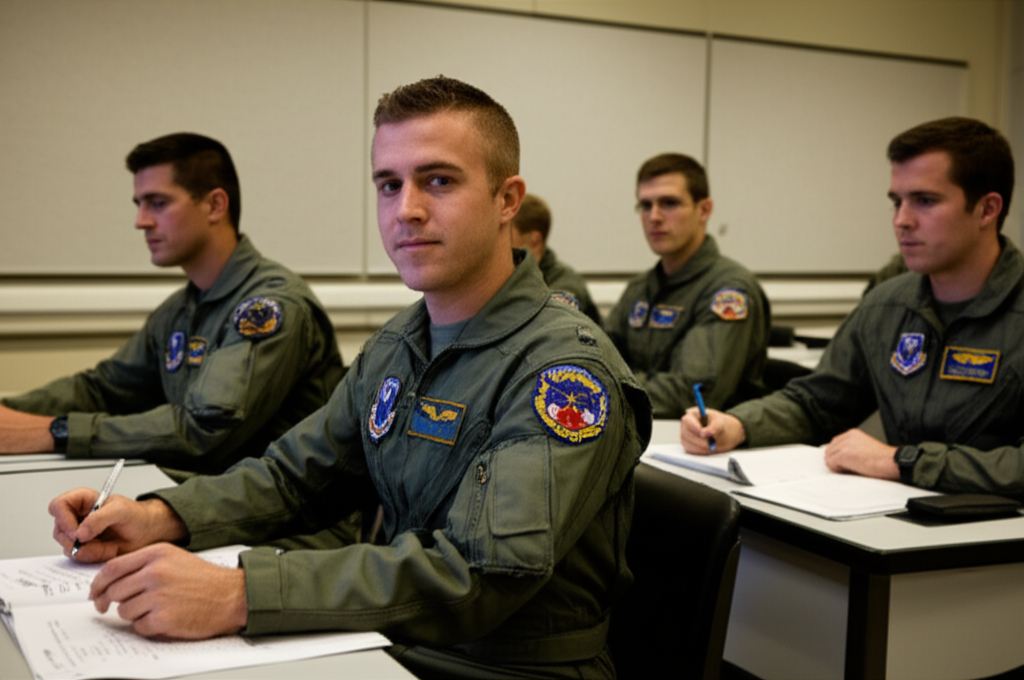
Initial Flight Training (IFT) or equivalent screens out candidates before expensive jet training begins:
- Duration: 4-8 weeks depending on branch
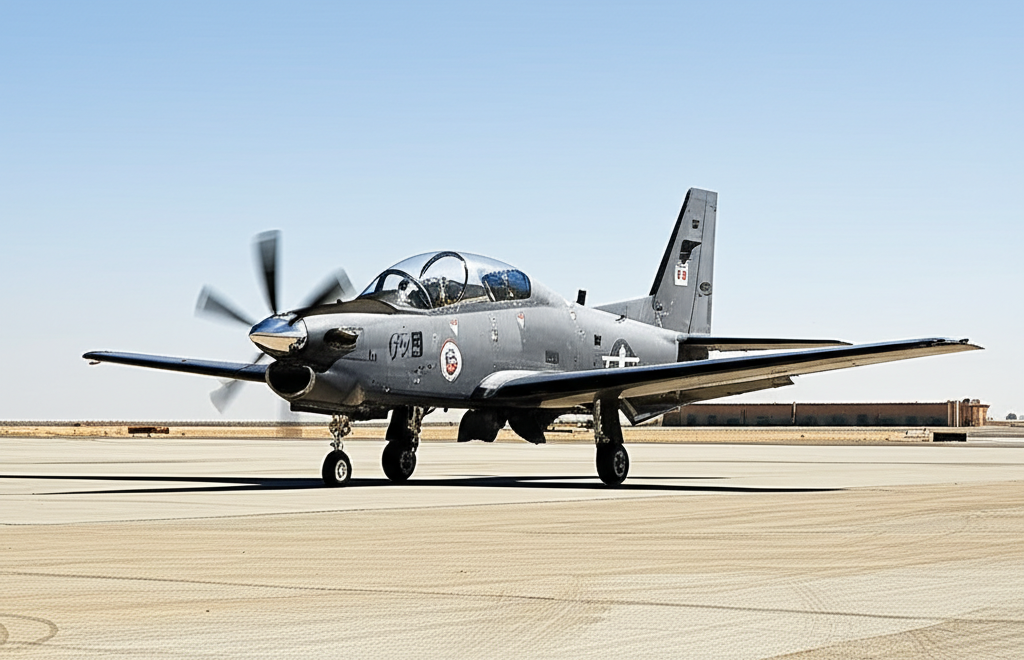
- Aircraft: Light single-engine trainers (DA20, T-6 Texan II)
- Purpose: Assess basic flying aptitude, airsickness susceptibility, and adaptability
- Washout rate: 10-15%
The military invests relatively little at this stage. If you can’t handle basic flight, better to find out now than after $1M+ in jet training.
Phase 3: Primary Flight Training
The real pipeline begins. All branches use the T-6 Texan II for primary training:
What You Learn:
- Basic aircraft handling and aerobatics
- Instrument flying
- Formation basics
- Navigation
- Emergency procedures
Duration and Pressure:
6-9 months of intensive daily flying and academics. Class rankings determine track selection—your performance here decides whether you fly fighters, heavies, helicopters, or something else entirely.
Washout rate:
15-25%. Some self-eliminate; others fail checkrides or can’t keep up with the pace.
Phase 4: Track Selection
Based on primary performance, class ranking, and needs of the service, pilots select (or are assigned) a track:
Air Force Tracks:
- Fighter/Bomber: T-38 training, then F-15, F-16, F-22, F-35, B-1, B-2, B-52
- Airlift/Tanker: T-1 or T-44 training, then C-17, C-130, KC-135, KC-46
- Helicopter: UH-1, then operational aircraft
Navy/Marine Tracks:
- Strike (Jets): T-45 Goshawk, then F/A-18, F-35
- Maritime: Multi-engine trainers, then P-8, E-2
- Rotary: TH-57, then H-60, H-53, etc.
Army Aviation:
All Army pilots fly helicopters. Track selection determines Apache, Blackhawk, Chinook, or other airframes.
Phase 5: Advanced Training
Training specific to your track. Fighter pilots fly the T-38 Talon (USAF) or T-45 Goshawk (Navy) for another 6-9 months. Heavy pilots fly the T-1 Jayhawk or similar multi-engine trainers.
This phase includes:
- Advanced aerobatics (fighters)
- Weapons delivery (fighters)
- Multi-crew coordination (heavies)
- Low-level navigation
- Night operations
Phase 6: Introduction to Fighter Fundamentals (IFF)
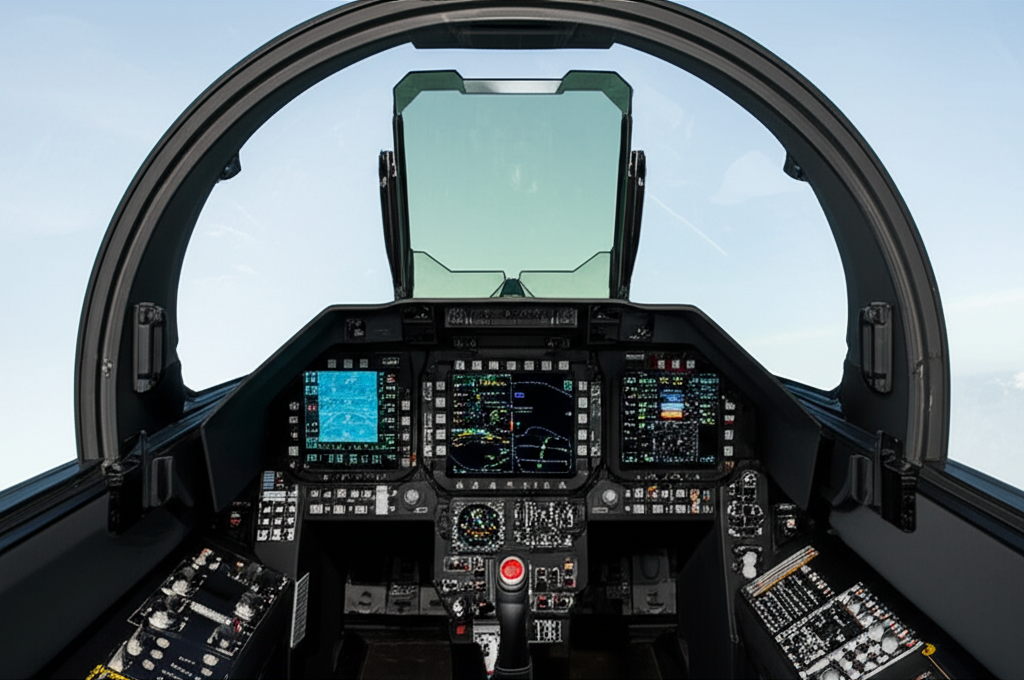
Fighter-track pilots only. Learn basic fighter maneuvers, air-to-air tactics, and air-to-ground weapons delivery in the AT-38 or T-38C. This is where you learn to “fight” an aircraft, not just fly it.
Phase 7: Formal Training Unit (FTU)
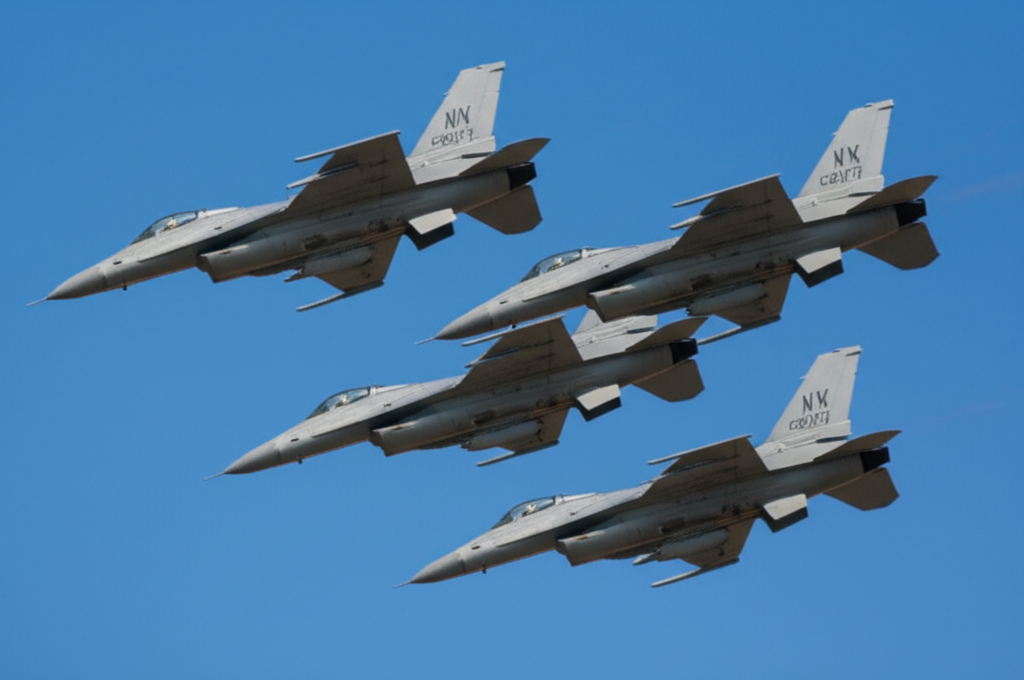
Finally, you fly your actual operational aircraft. F-16 pilots go to Luke AFB. F-22 pilots go to Tyndall. Navy F/A-18 pilots go to VFA-106.
Duration: 6-12 months depending on aircraft complexity.
You graduate as a “wingman”—qualified to fly the aircraft but still junior. True combat readiness takes another 1-2 years of squadron experience.
Total Timeline
| Phase | Duration |
| Commissioning (ROTC/Academy) | 4 years |
| Flight Screening | 1-2 months |
| Primary Training | 6-9 months |
| Advanced Training | 6-9 months |
| IFF (fighters only) | 2-3 months |
| FTU | 6-12 months |
| Total to Wingman | 6-7 years from college start |
Service Commitment
Pilot training is expensive. The military recovers that investment through service commitments:
- Air Force: 10-year commitment after completing training
- Navy: 8-year commitment
- Army: 6-year commitment
These commitments reset if you change airframes or attend certain schools. Some pilots end up serving 15+ years before their commitment ends.
Age Limits
You must commission before age 33 (varies slightly by branch and program). Waivers exist but are rare. The clock starts ticking the day you graduate college.
What Actually Gets You Selected
Competitive pilot candidates share these traits:
- AFOQT/ASTB scores: 90th percentile or better on pilot aptitude sections
- GPA: 3.0 minimum, 3.5+ preferred (STEM majors weighted positively)
- Physical fitness: Top 10% in your commissioning source
- Leadership positions: Demonstrated in ROTC, sports, or organizations
- Flight experience: Not required but helps show commitment (private pilot license)
- Interview performance: Boards want confident, coachable, team-oriented candidates
Requirements and timelines change. Verify current information through official military recruiting channels before making career decisions.


Leave a Reply