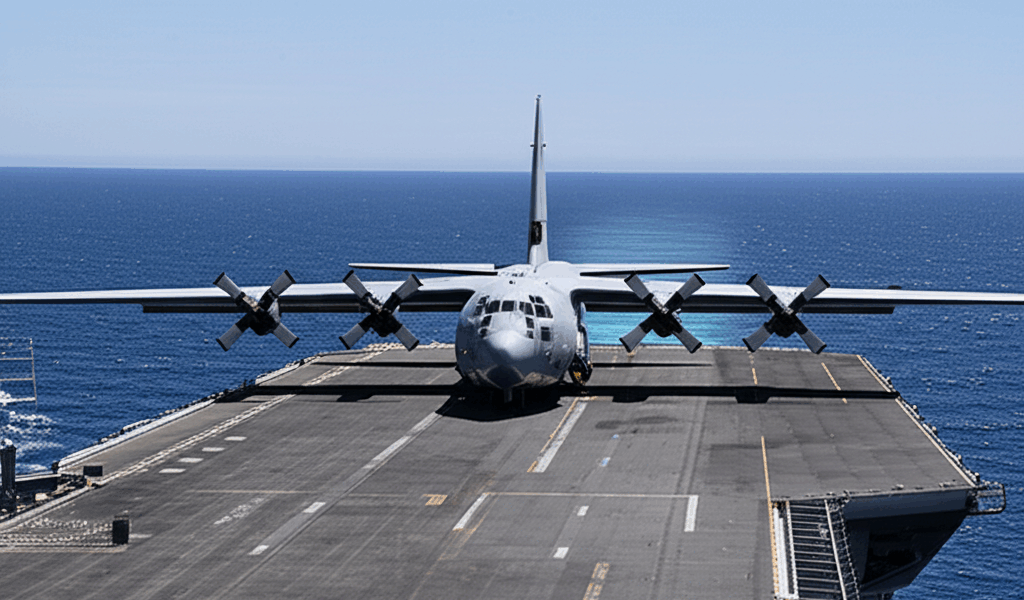
In 1963, a Marine Corps KC-130F Hercules made 29 touch-and-go landings and 21 full-stop landings on the USS Forrestal. No hooks. No catapults. Just a massive four-engine turboprop doing things nobody designed it to do.
The Navy wanted to know if they could resupply carriers at sea using cargo aircraft. What followed became one of aviation’s most impressive demonstrations of pilot skill.
The Challenge
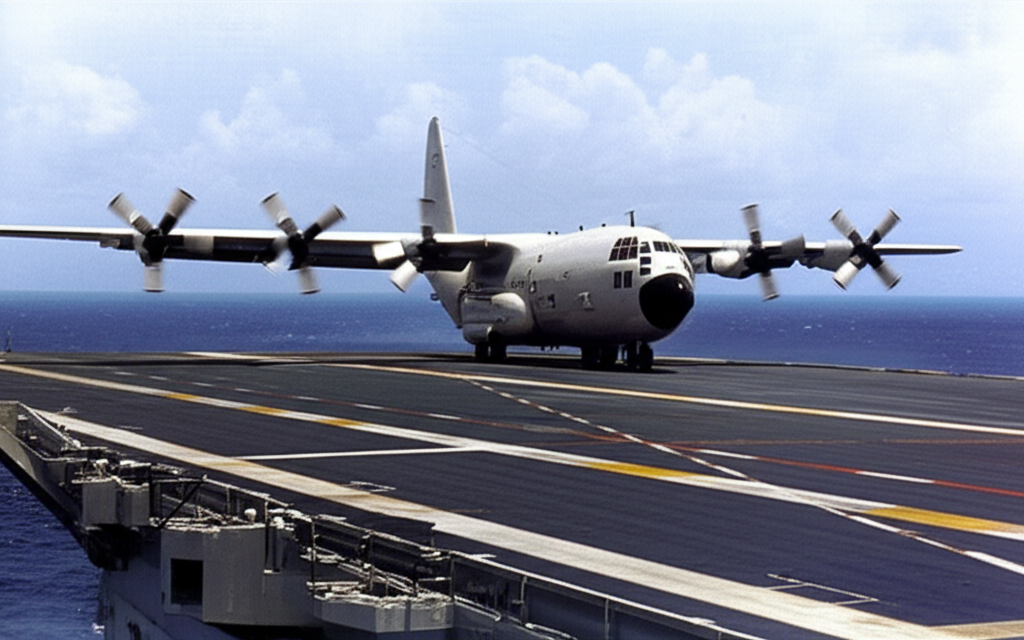
Aircraft carriers are designed for jets with tailhooks and catapults. The C-130 Hercules, with a wingspan of 132 feet and a maximum weight of 155,000 pounds, seemed absurdly oversized for carrier operations. But the Navy had a logistics problem: how to deliver heavy supplies to carriers operating far from port.
Lieutenant James Flatley III and his crew from VX-6 volunteered to test whether the impossible was merely improbable.
The Tests
Over several days in late October and early November 1963, Flatley repeatedly landed the KC-130F on the Forrestal’s deck. The aircraft needed only 267 feet to stop—remarkable for a plane that normally requires 2,500 feet of runway. Takeoff required just 745 feet.
The Forrestal’s deck measured over 1,000 feet, providing margins that still seem impossibly tight for such a large aircraft. Flatley approached at minimum controllable airspeed, touching down precisely on the designated spot each time.
Why It Never Happened Operationally
Despite the successful tests, the Navy never implemented carrier-based C-130 operations. The concept worked, but helicopter resupply proved more practical and less risky. Landing a C-130 on a pitching deck in bad weather would have been far more challenging than the test conditions allowed.
Still, those flights demonstrated what skilled pilots and robust aircraft can accomplish. The C-130’s carrier landings remain a testament to the aircraft’s versatility and the crew’s courage.
James Flatley received the Distinguished Flying Cross for his test work. The KC-130F, bureau number 149798, was later displayed at museums commemorating the achievement.

Leave a Reply