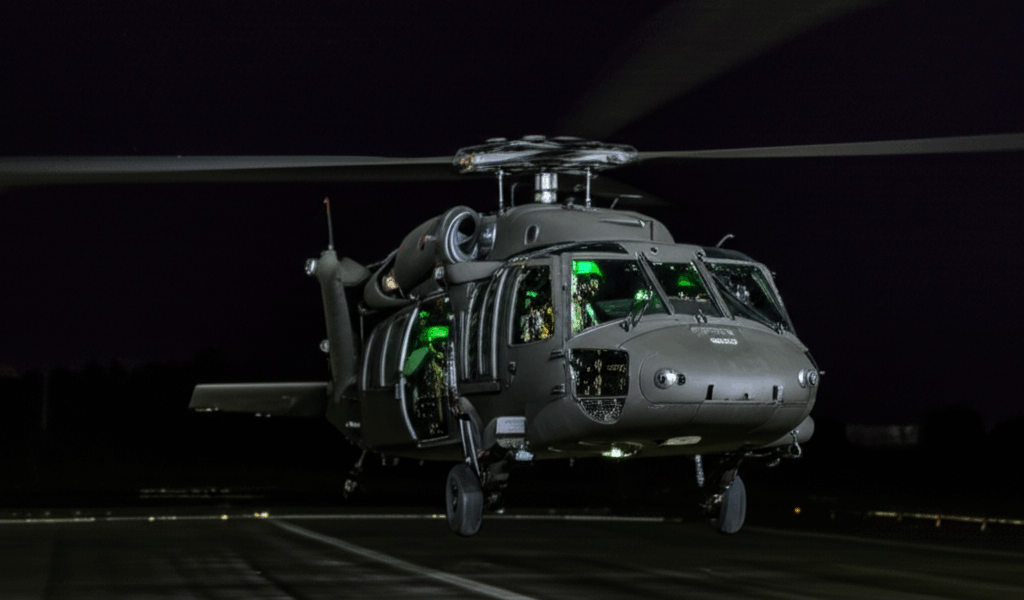
How Night Vision Changed Everything About Flying Helicopters
Before night vision goggles became standard equipment, helicopter operations after dark meant flying on instruments or not flying at all. NVGs transformed rotary-wing aviation into a 24-hour capability that adversaries struggle to counter.
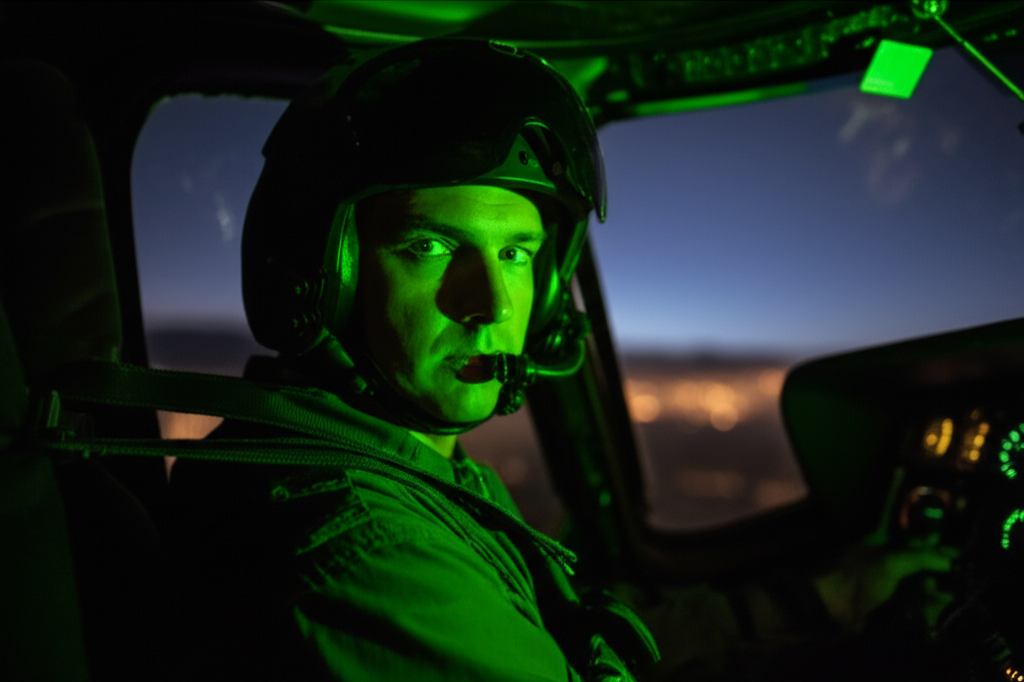
The technology seems simple. Goggles amplify available light, letting pilots see terrain and obstacles that would otherwise be invisible. In practice, NVG flying demands entirely different skills and creates unique hazards that pilots must master.
Depth perception suffers under NVGs. The two-dimensional green image lacks cues that daylight provides. Pilots learn to judge distances through experience and cross-reference with instruments. New NVG pilots often struggle with hover height and approach profiles until their brains adapt.
Field of view limitations create constant danger. Standard NVGs provide roughly 40-degree vision compared to human eyes’ 180-degree peripheral awareness. Pilots must actively scan to compensate, turning their heads continuously to check areas the goggles can’t see.
Illumination conditions change everything. A bright moon with snow cover provides excellent NVG conditions. Overcast nights with minimal ambient light degrade performance dramatically. Pilots must understand these variations and adjust tactics accordingly.
Training for NVG operations takes time and money. The goggles themselves cost thousands. Training sorties require specific environmental conditions. Currency requirements mean regular flights to maintain proficiency. Units must balance NVG training against other mission preparation.
Despite challenges, NVG capability provides tactical advantages that justify the investment. Enemies who can’t see in the dark become vulnerable to forces that can. Medevac missions that would have waited for dawn now launch immediately. Special operations rely heavily on darkness as concealment.


Leave a Reply