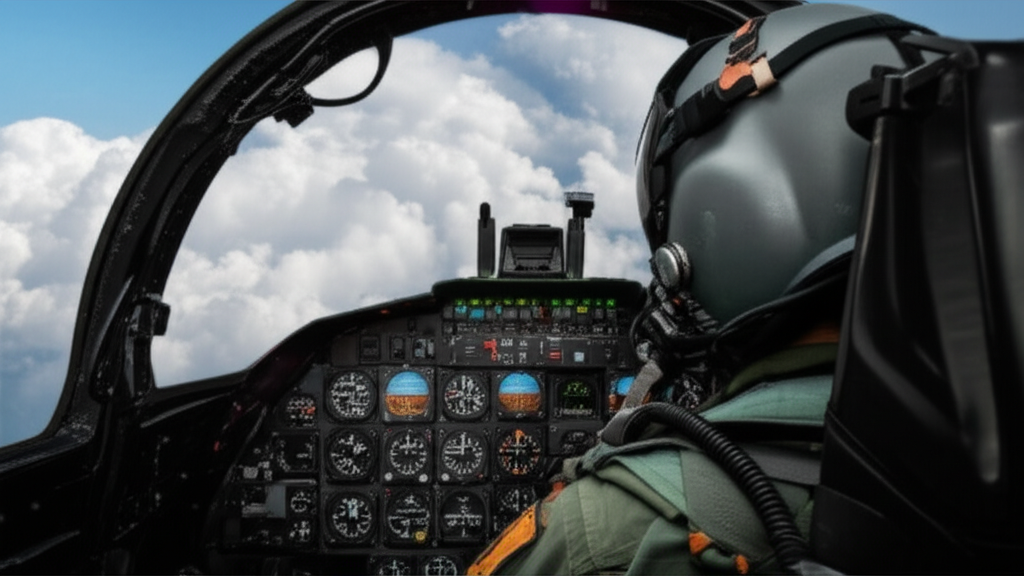
Instrument flying separates capable pilots from exceptional ones. The ability to navigate and operate aircraft solely by reference to instruments, without visual contact with the ground or horizon, is fundamental to military operations that cannot pause for bad weather.
The Challenge of Spatial Disorientation
Human senses evolved for ground-based movement. In flight without visual references, the vestibular system in your inner ear provides unreliable information. Pilots can feel like they are climbing while actually descending, or sense a turn that is not happening. These illusions have caused countless accidents when pilots trusted their bodies over their instruments.
Training teaches pilots to ignore physical sensations and trust instrument indications absolutely. This counterintuitive skill requires significant practice and conscious effort, particularly during stressful situations when instinct screams otherwise.
Primary Flight Instruments
Six instruments form the traditional scan pattern. The attitude indicator shows aircraft pitch and bank, serving as the primary reference. The altimeter indicates height above sea level, while the vertical speed indicator shows climb or descent rates. The airspeed indicator, heading indicator, and turn coordinator complete the standard six-pack arrangement.

Modern glass cockpits integrate these functions into large multifunction displays, but the scan patterns and cross-checking techniques remain essential. Military pilots must demonstrate proficiency in both analog and digital instrument environments.
Approach Types and Minimums
Instrument approaches guide aircraft through clouds to runway alignment. Precision approaches like ILS provide both horizontal and vertical guidance down to minimums of 200 feet above the runway. Non-precision approaches offer only horizontal guidance with higher minimums.
Military operations sometimes require approaches to minimums that would ground civilian flights. Combat necessity may demand accepting higher risk than peacetime operations permit. Understanding approach categories, minimums, and personal limitations keeps pilots alive during demanding weather operations.
Maintaining Currency
Instrument skills deteriorate without practice. Military pilots must complete instrument approaches, holding patterns, and tracking tasks within specified periods to remain qualified. Simulator time supplements actual flight training, allowing practice of emergency procedures and unusual situations too dangerous for real aircraft.



Leave a Reply